Art of Kash / The Art of Kashmir
The Art of Kashmir
A look inside the workshops of Srinagar, where every shawl, stole, and piece of craft we sell begins — in the hands of artisans carrying forward centuries-old traditions.
Kashmir's living craft heritage
Kashmir has been a centre of fine craftsmanship for centuries, its artisans passing down techniques from one generation to the next largely unchanged by time. Long before "Pashmina" became a word known around the world, Kashmiri hands were spinning fleece into yarn, weaving it on wooden looms, and embroidering it by candlelight with motifs drawn from the valley's own gardens and mountains.
This craftsmanship isn't limited to textiles. Walk through the old city of Srinagar and you'll find workshops for hand-carved walnut wood, hammered and engraved copperware, papier-mâché, and khatamband — the intricate geometric wood inlay work seen on ceiling panels and furniture. Each craft has its own guild, its own vocabulary, and its own family lineages of ustads (master craftsmen) who train the next generation.
At Art of Kash, we work directly with these artisans in Srinagar. The photographs below are from their workshops — real work in progress, not staged studio shots — because we want you to see exactly where and how your shawl or stole was made.
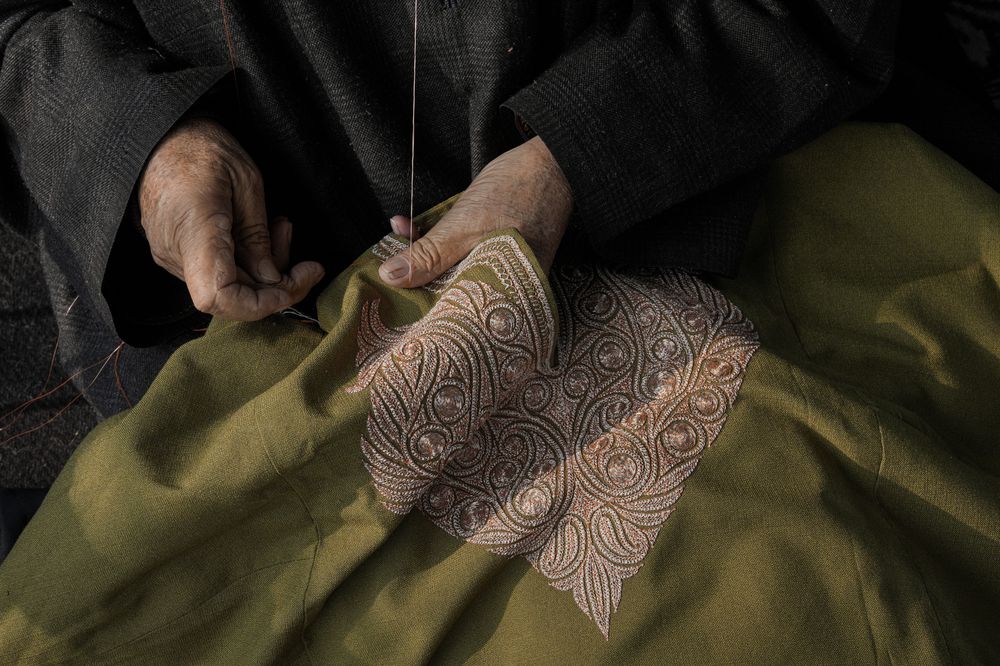
Sozni — hand embroidery
Sozni is Kashmir's signature needlework — fine, single-strand hand embroidery worked so delicately from the reverse side of the fabric that the design appears almost identical on both faces. Motifs are drawn from nature: paisleys, vines, chinar leaves, and birds like the peacock, each stitched entirely by hand, often taking weeks to months to complete a single piece.
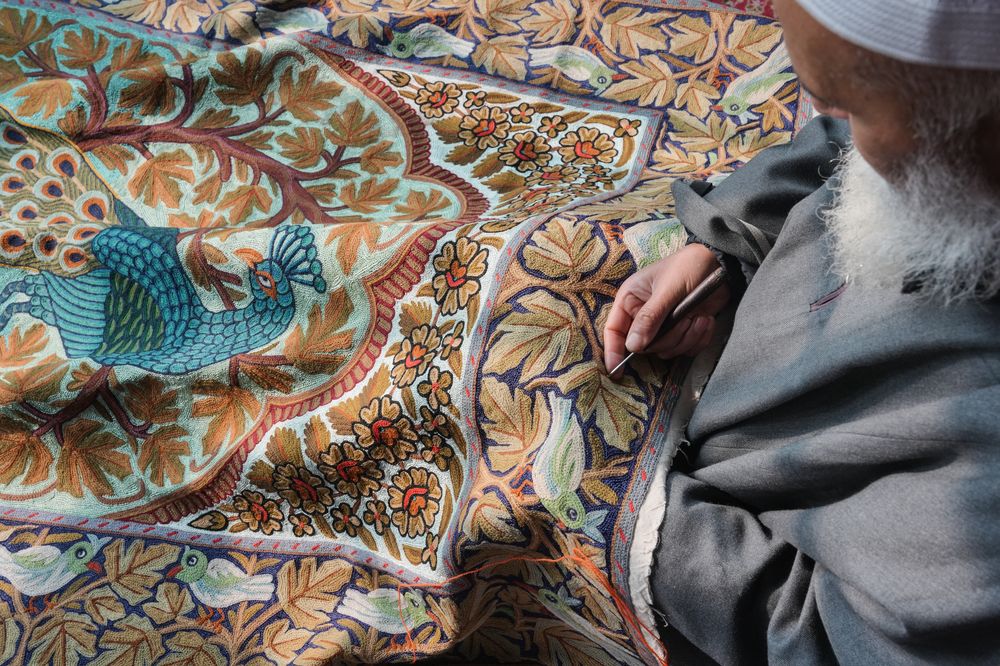
A peacock motif taking shape in Sozni needlework — a design drawn from Kashmiri gardens and worked entirely by hand.
An artisan working a fine scrolling pattern onto olive wool, needle and thread guided entirely by eye.
Pashmina hand-weaving
Before it becomes a shawl, Pashmina yarn is spun by hand and set up on a traditional wooden handloom, thread by thread. Weavers work with dozens of small bobbins — visible in the photographs below — feeding colour into the warp to build stripes, checks, and borders one pass of the shuttle at a time. It's slow, meditative work; a single stole can take days on the loom.
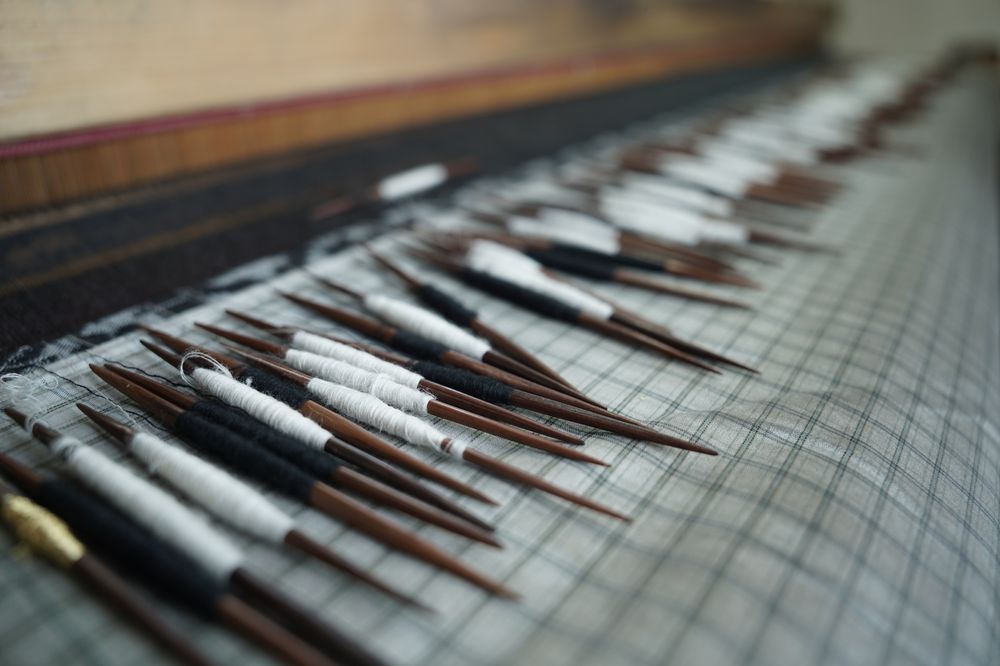
Rows of hand-wound thread bobbins, ready to be fed into the loom.
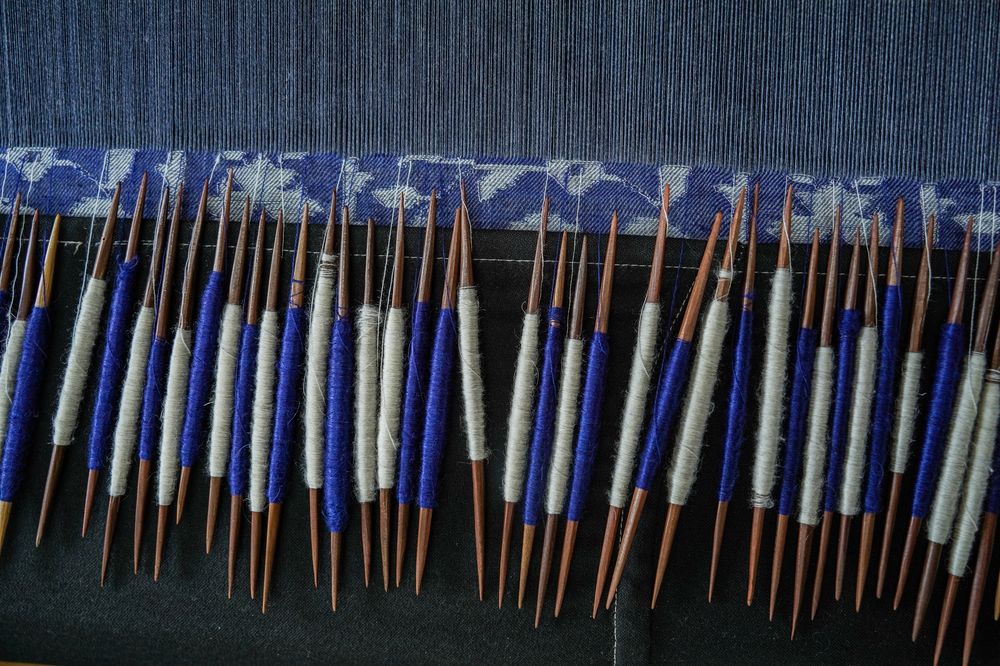
Indigo and cream bobbins set along the warp of a hand loom.
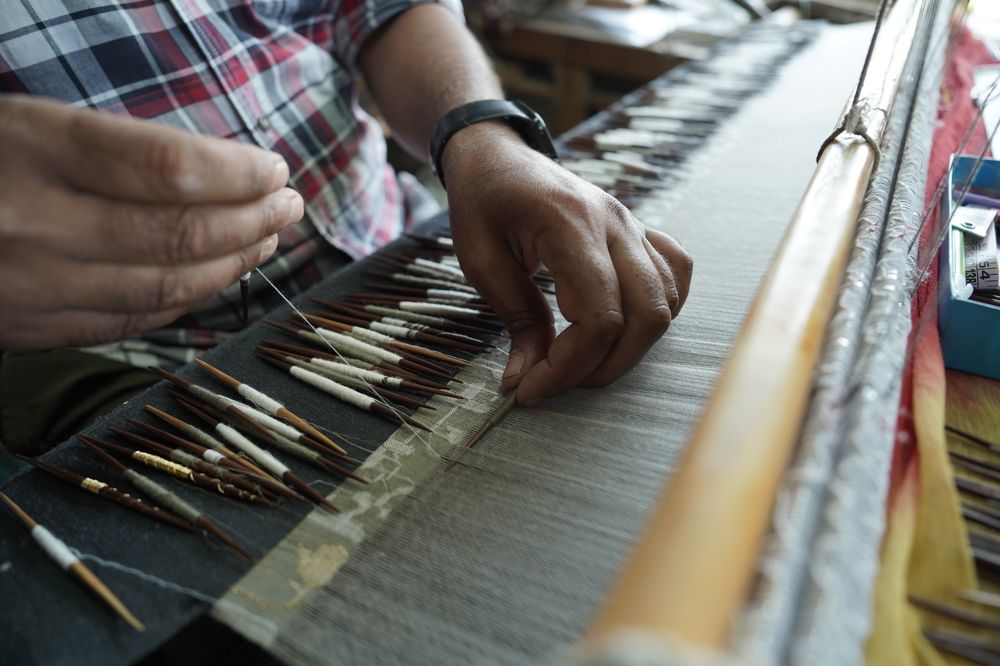
A weaver's hands guiding thread through the loom, building the pattern pass by pass.
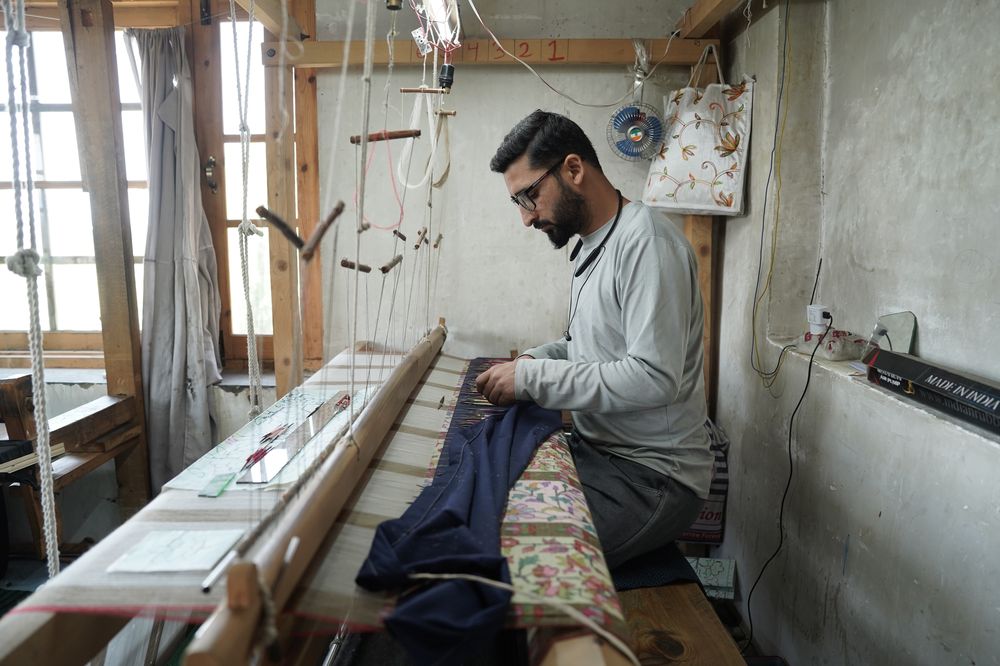
A weaver at work at his handloom in a Srinagar workshop.
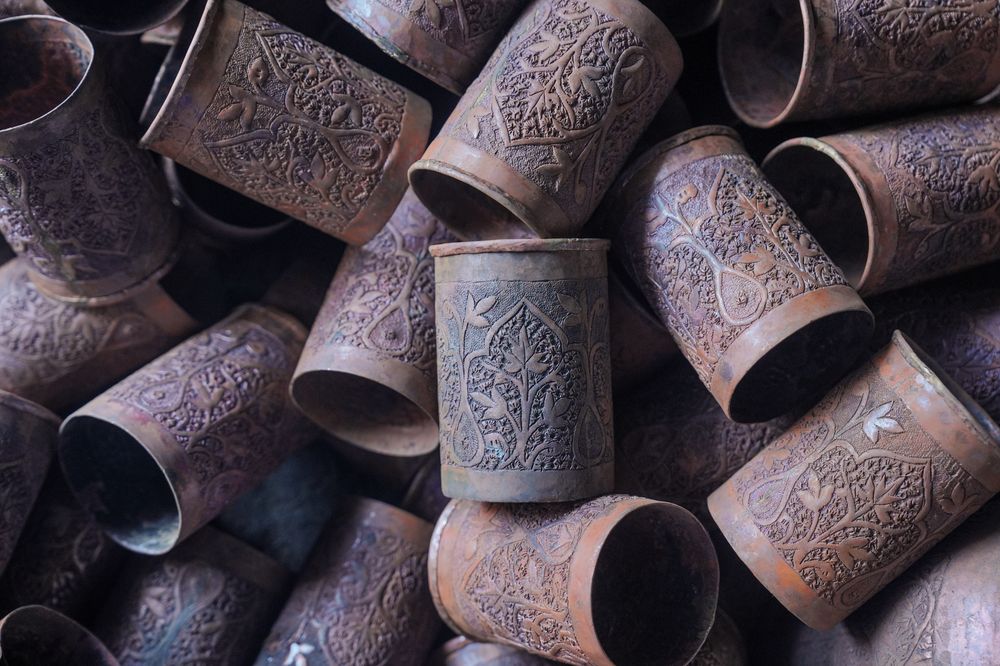
Hand-engraved copper vessels finished with traditional Naqashi patterns.
Copper, wood & more
Beyond textiles, Kashmir's artisans are equally known for hand-hammered and engraved copperware (Naqashi), intricate walnut wood carving, and khatamband — the geometric wood inlay work traditionally used on ceilings, now also seen in furniture and decor. These crafts share the same unhurried, hand-driven process as Pashmina weaving and embroidery.
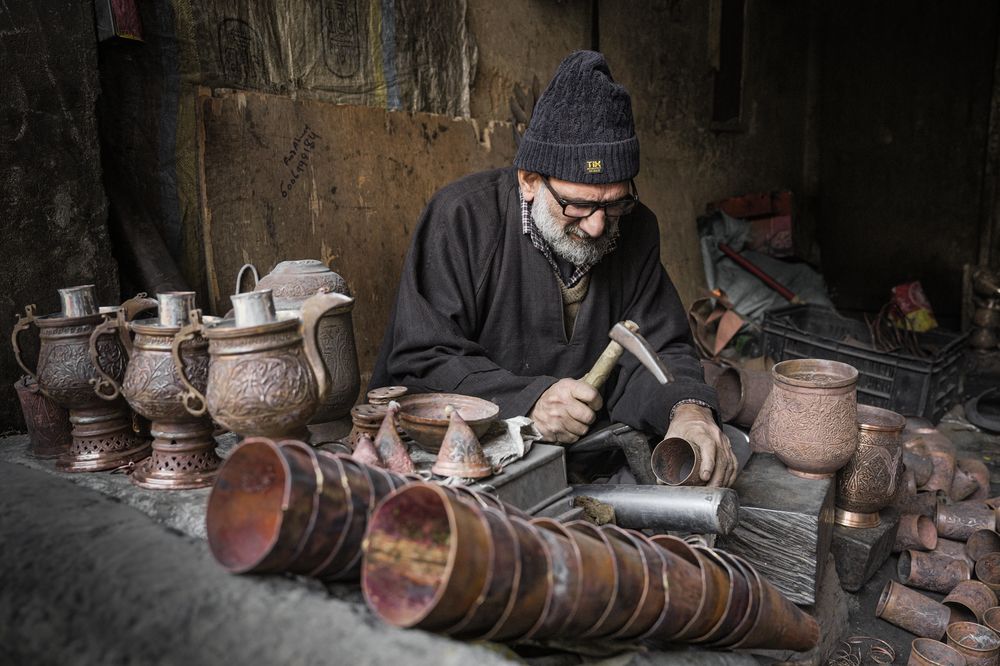
An artisan hand-engraving copperware in his Srinagar workshop.
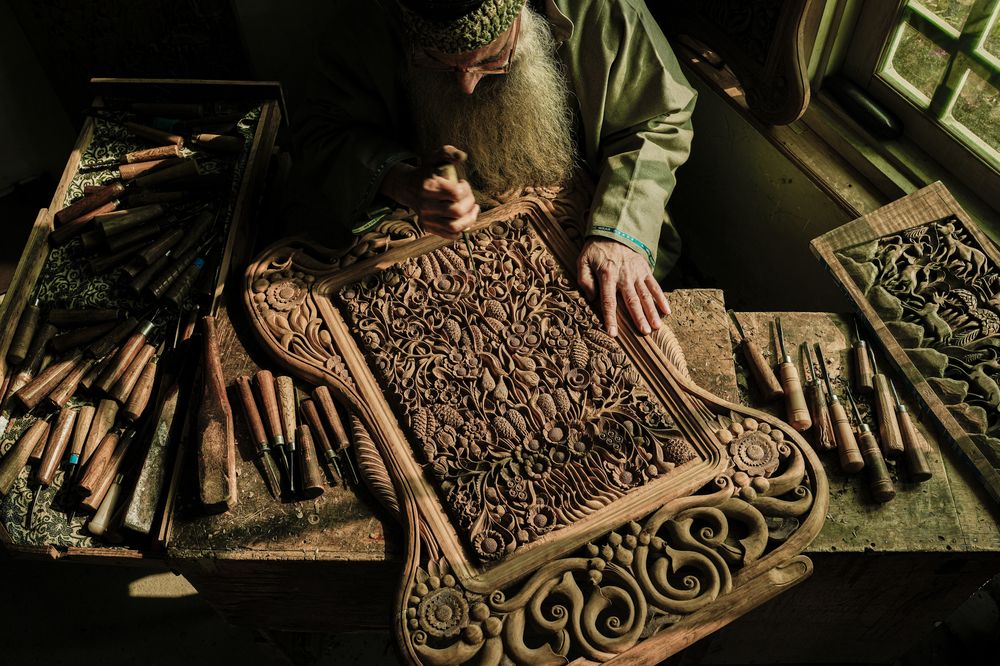
Traditional Kashmiri walnut wood carving, chiselled entirely by hand.
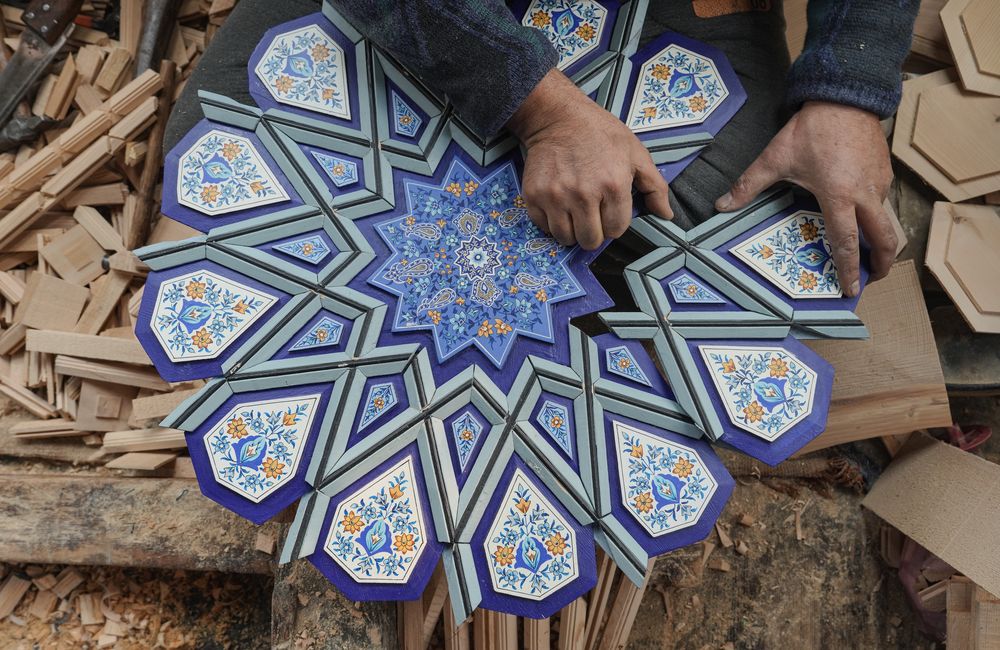
Geometric khatamband wood inlay work being pieced together by hand.
Every piece carries this craftsmanship
When you buy from Art of Kash, you're supporting the artisans and workshops behind these photographs. Browse our collection, or get in touch if you'd like to know more about how a particular piece was made.