Art of Kash / The Craft of Kashmir
The Craft of Kashmir
From raw yarn to finished shawl — a close look at the hand processes of spinning, weaving, dyeing, and embroidery that turn Pashmina wool into every Art of Kash piece.
How a Kashmiri shawl is made
Every Art of Kash piece passes through several distinct crafts before it's ready to wear, and each one is still done almost entirely by hand. Raw Pashmina fibre is washed and spun into fine yarn, wound onto bobbins, and set up thread by thread on a wooden handloom. What comes off the loom is plain fabric — it's the weeks of dyeing, printing, and embroidery afterward that give each shawl its character.
Colour is added by hand: lengths of woven fabric are dipped and rinsed repeatedly in small dye baths until the shade is even, then hung to dry in courtyards and along the riverside. Before embroidery begins, a hand-carved wooden block is often used to stamp the guiding outline of the design onto the cloth — the pattern the embroiderer then fills in, stitch by stitch, entirely by eye.
The photographs below follow that whole journey, from raw fibre to finished shawl, taken in workshops in and around Srinagar.
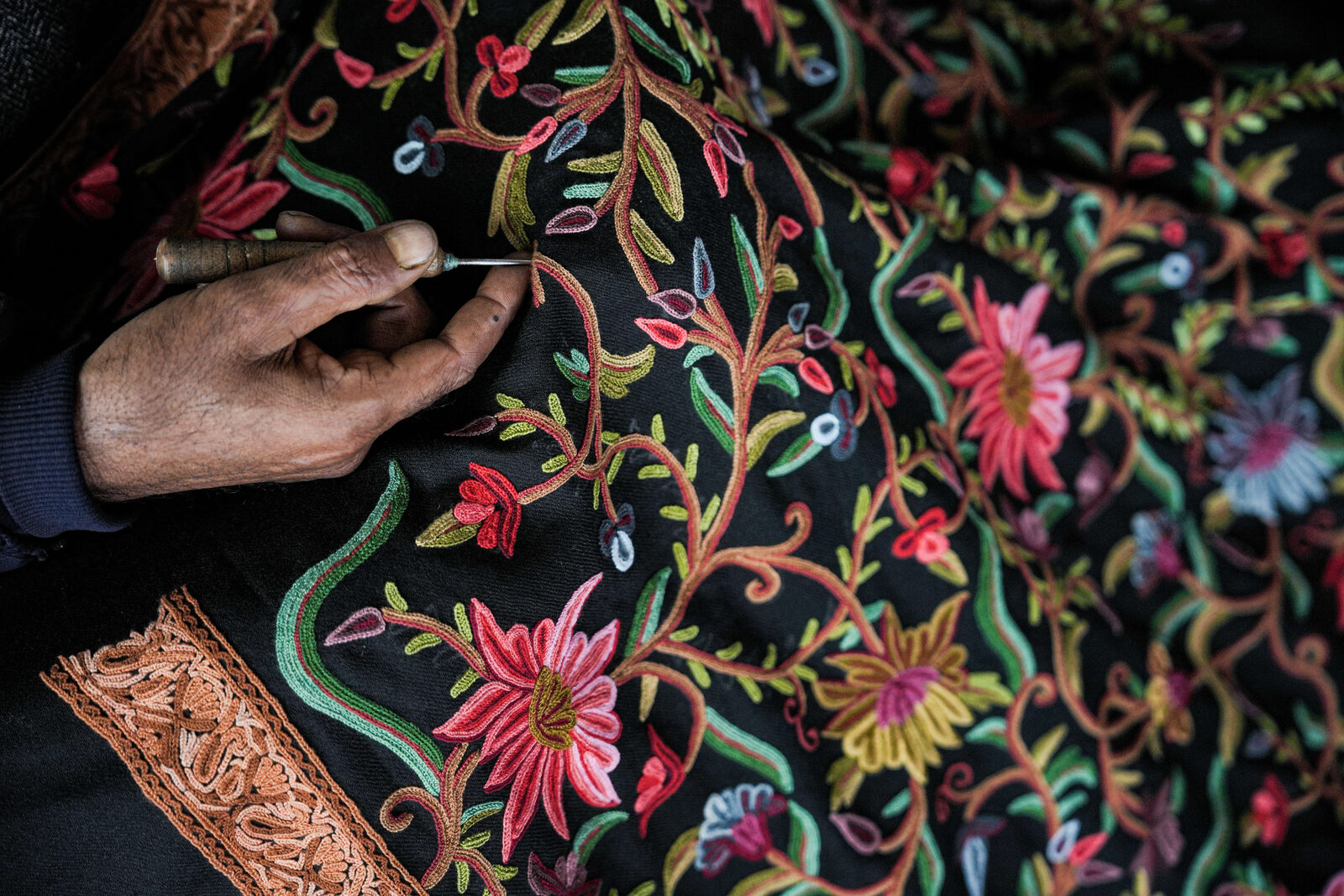
Yarn & spinning
Before it can be woven, raw Pashmina fibre is washed by hand to remove lanolin and dirt, then spun into fine, even yarn and wound onto cones ready for the loom.
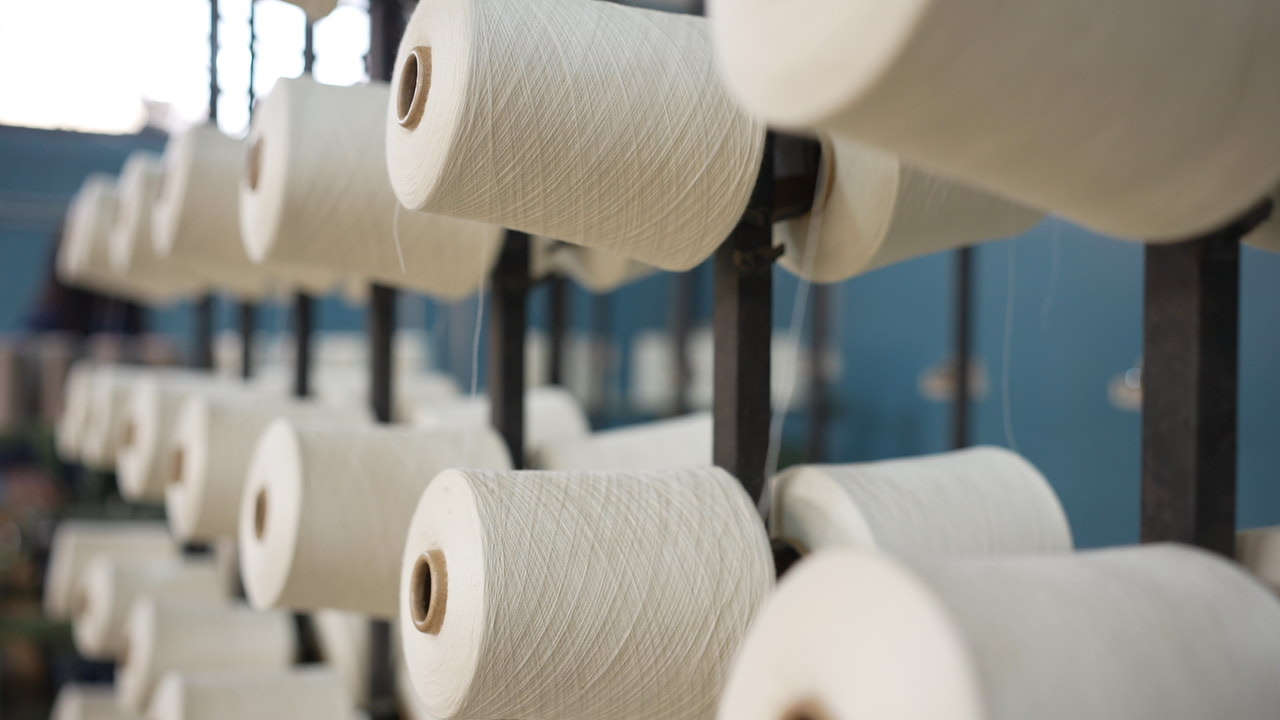
Rows of spun Pashmina yarn wound onto cones, ready to be fed onto the loom.
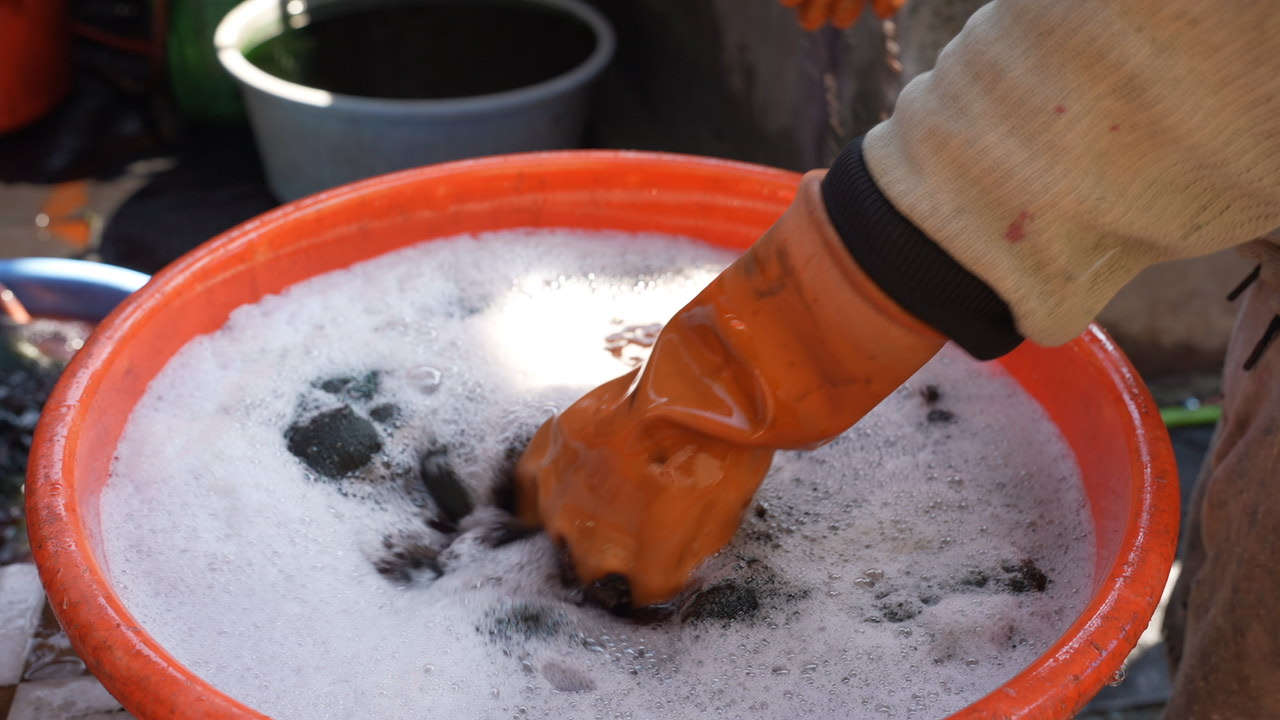
Raw wool being hand-washed in a soapy basin before it goes to the spinner.
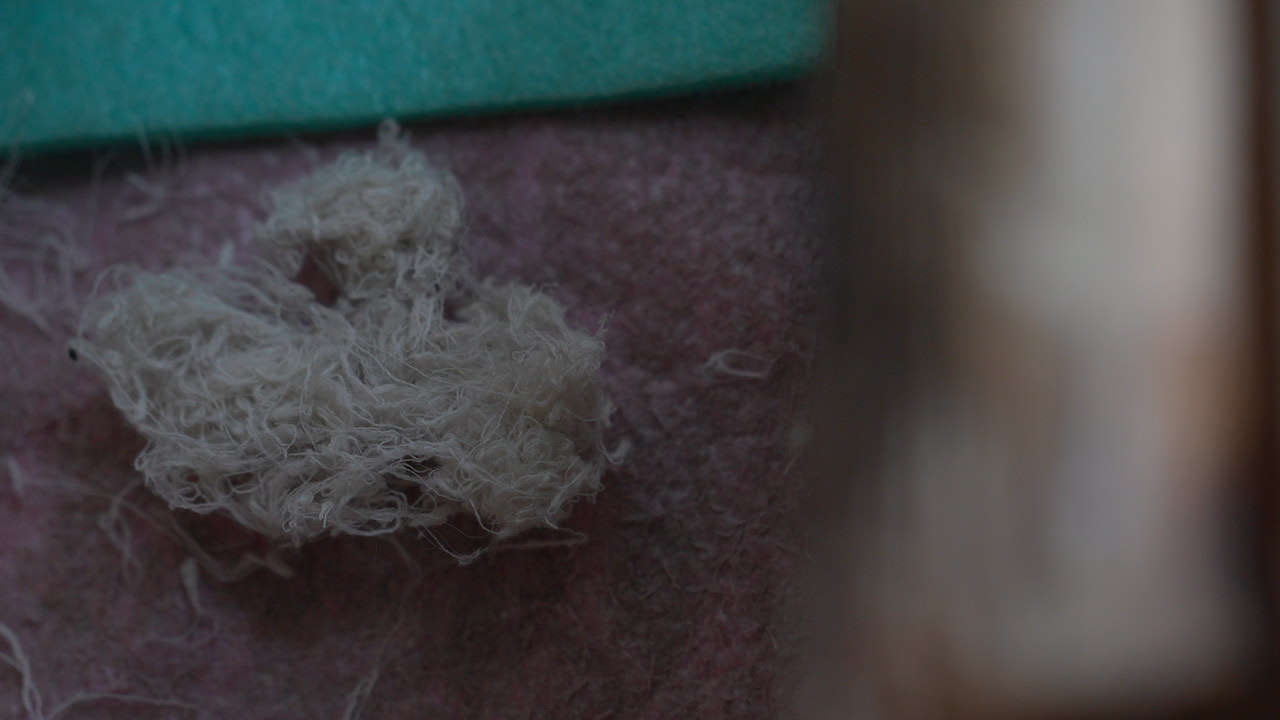
A tuft of raw Pashmina fibre, soft and unspun, set against dyed felted wool.
Hand-weaving on the loom
Weavers work the traditional wooden handloom by hand, passing weft thread through hundreds of warp ends one line at a time. Warp threads are strung and knotted onto the loom under tension before weaving even begins — a single stole can take days to finish.
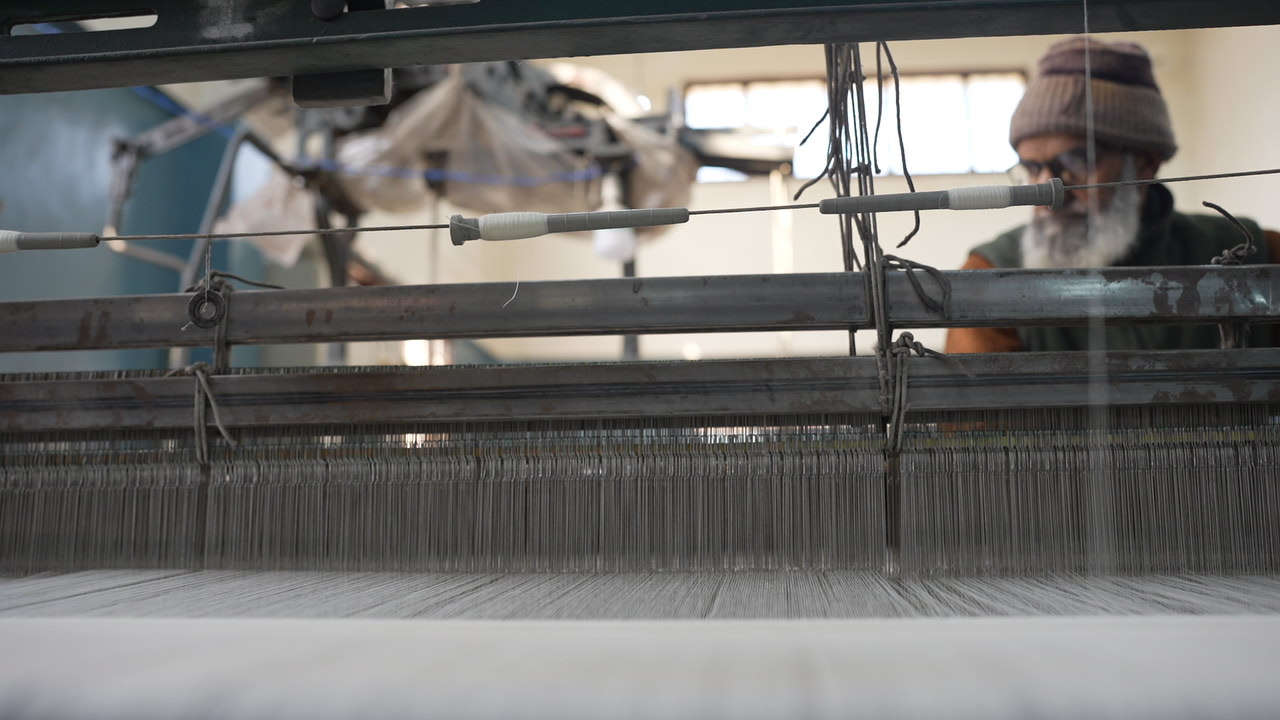
A weaver seated at his handloom, warp threads strung tight before him.
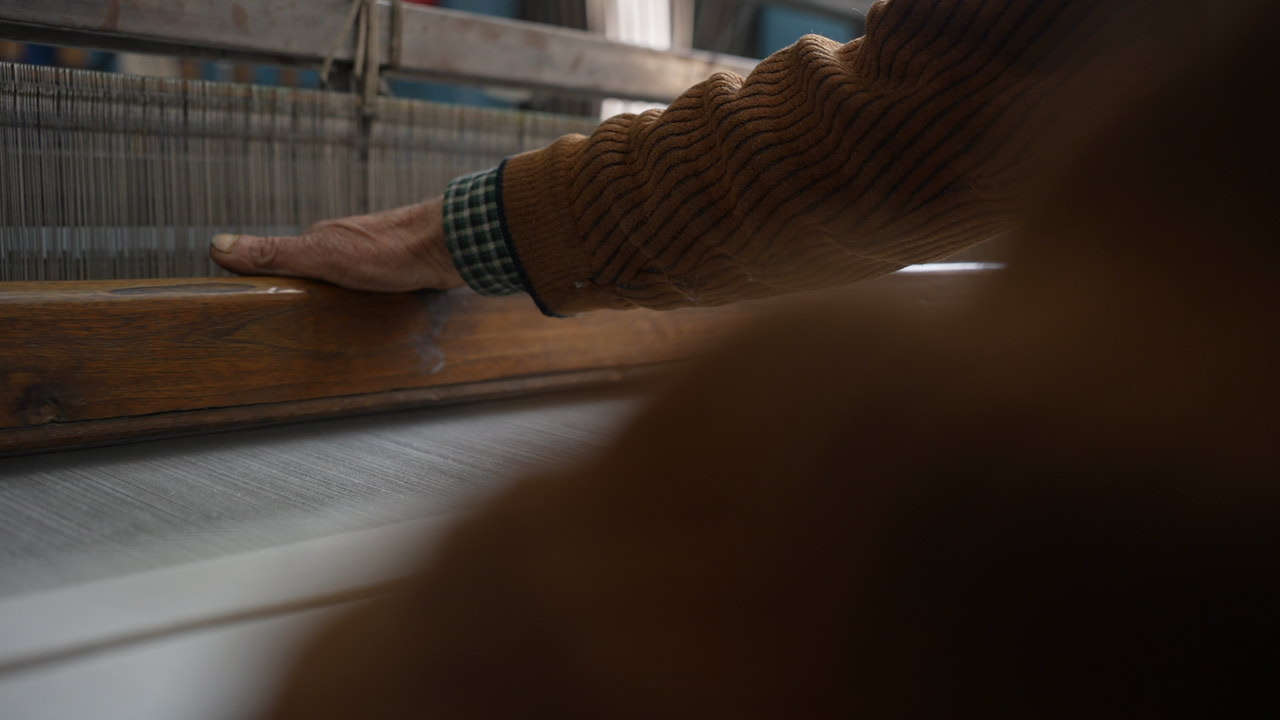
A weaver's hand steadying the cloth beam as fabric slowly builds on the loom.
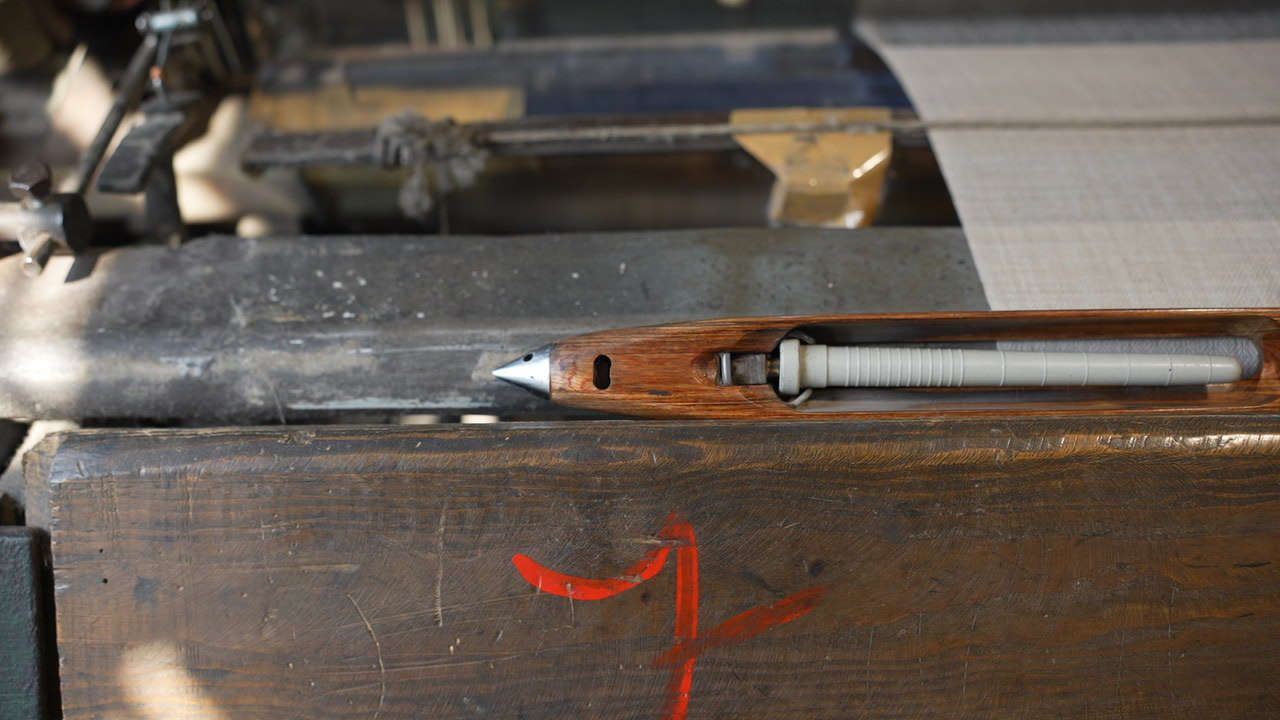
The wooden shuttle that carries weft thread back and forth across the loom.
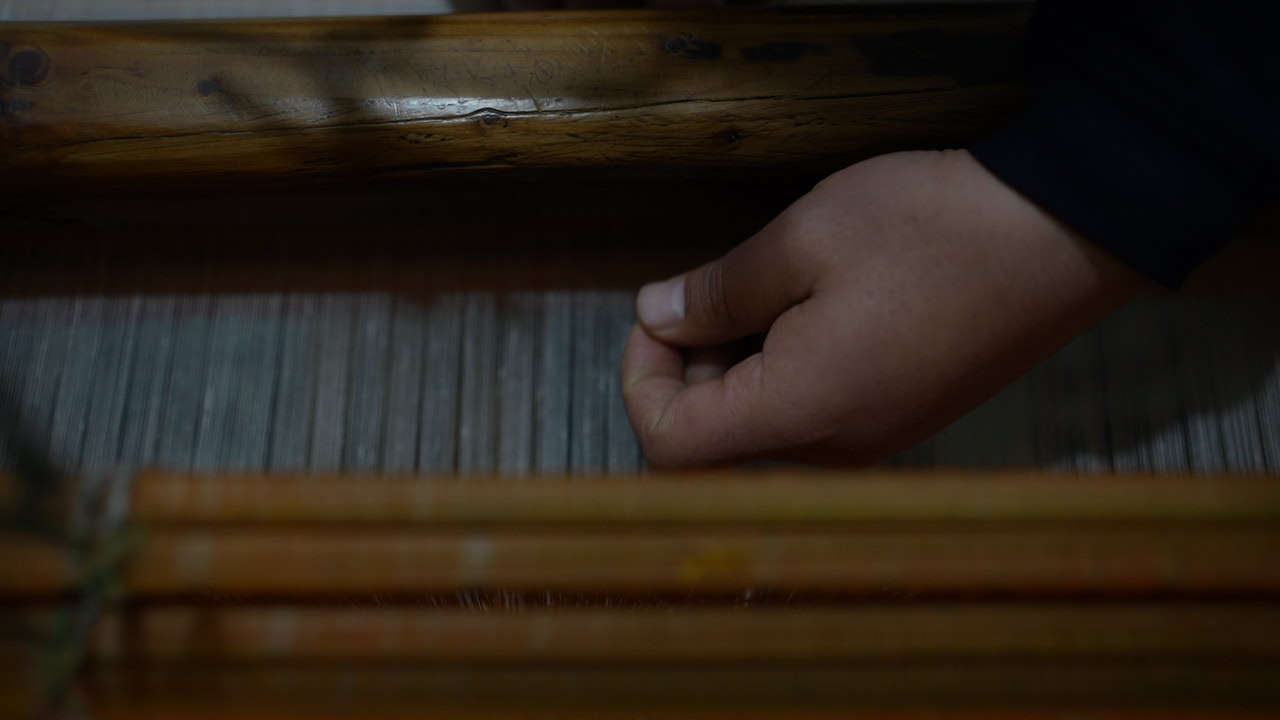
A weaver's hand adjusting warp threads mid-weave.
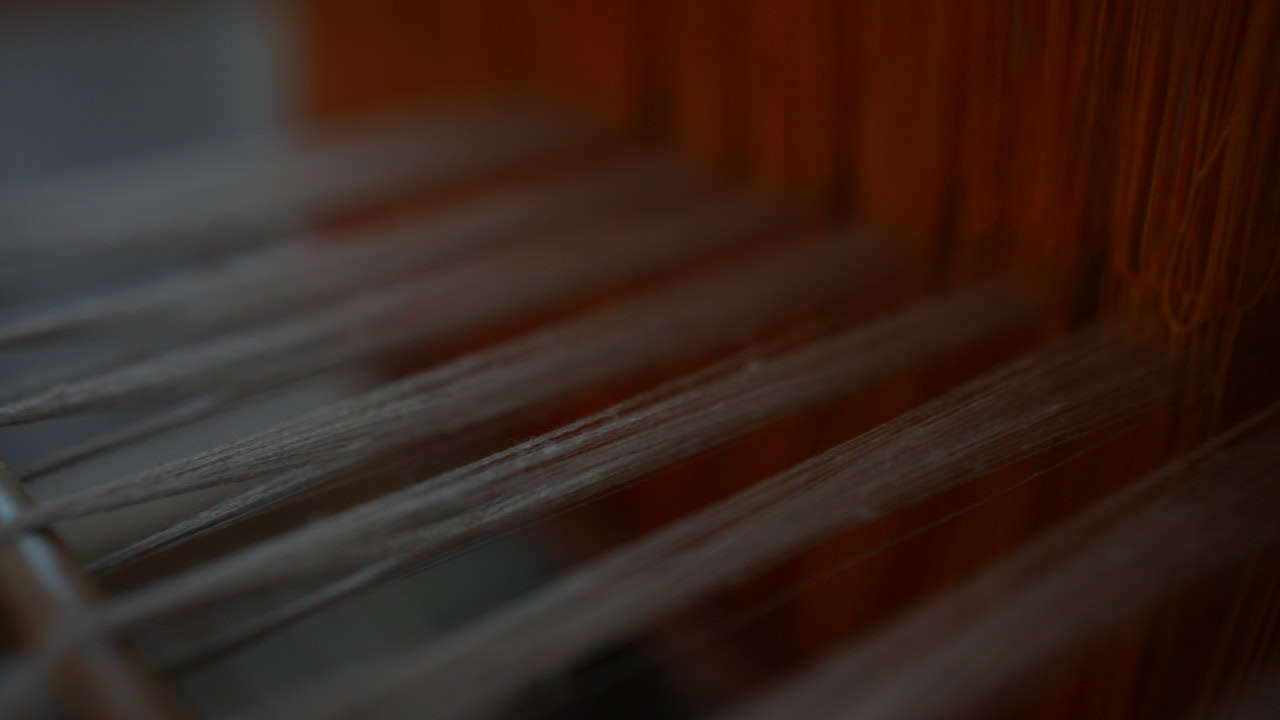
Warp threads strung tight on the loom, close up.
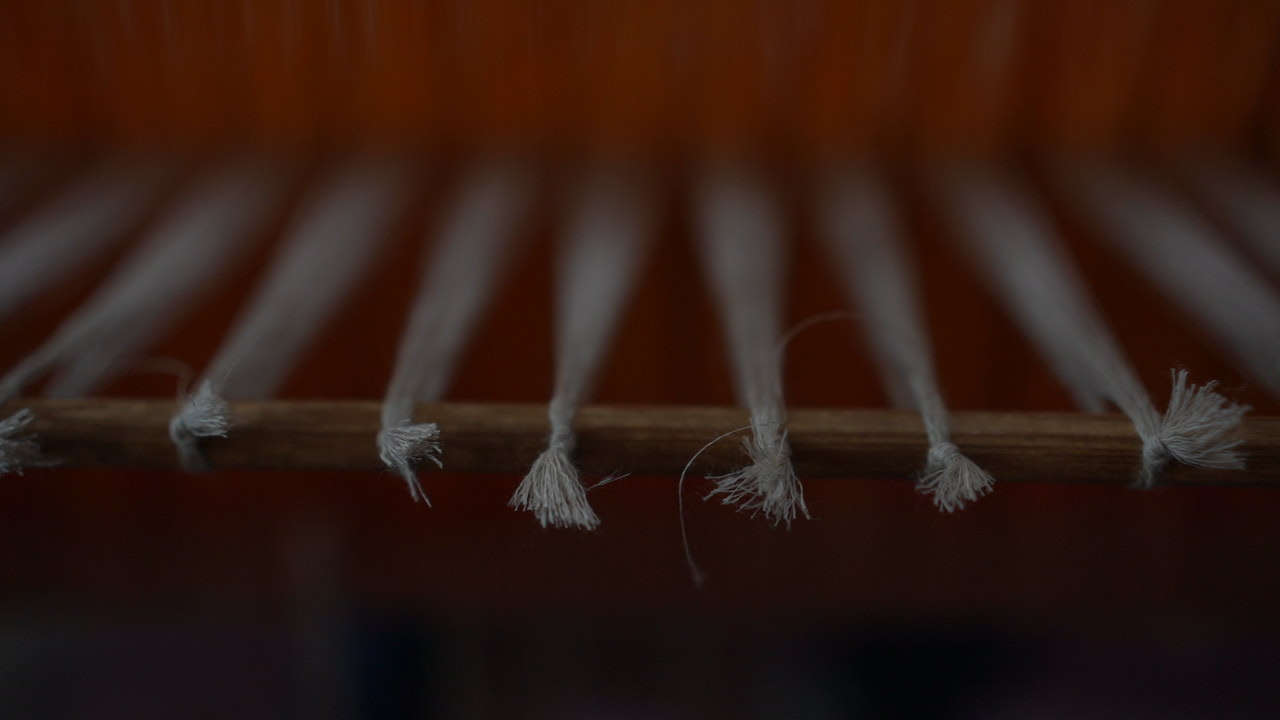
Warp ends individually knotted onto a wooden rod, tied and ready for weaving.
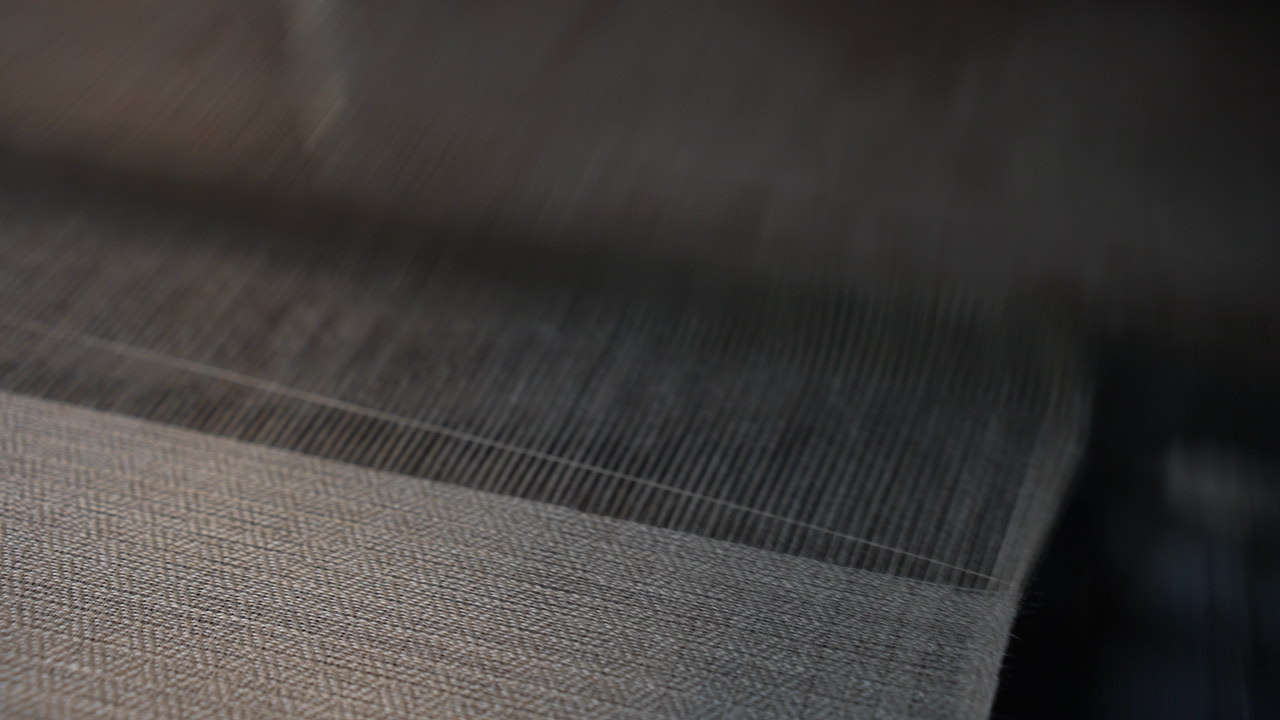
A diamond-twill weave taking shape on the loom, thread by thread.
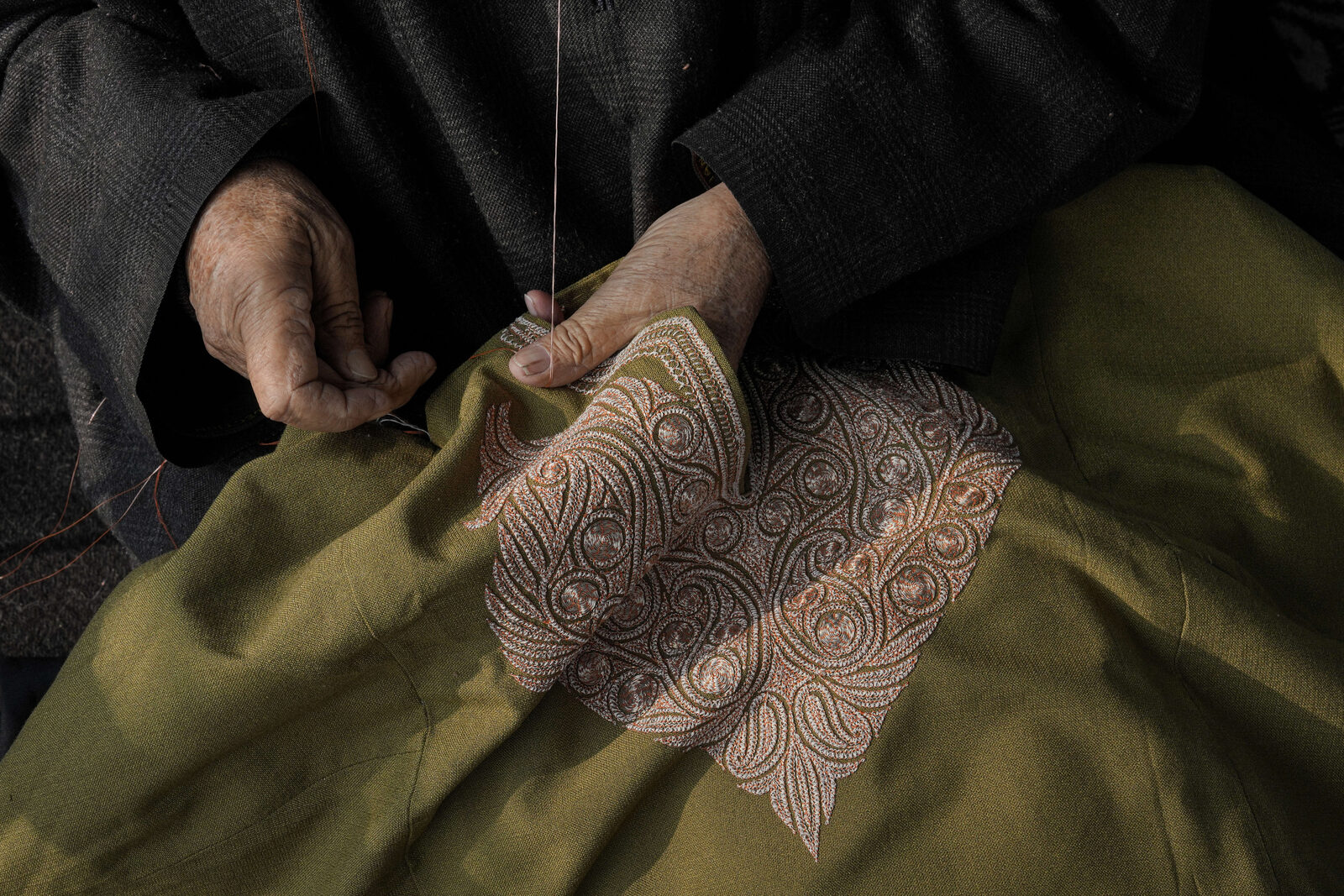
An artisan working Tilla metallic-thread embroidery into a paisley motif on fine wool.
Kani weaving
Kani shawls are woven, not embroidered — their intricate patterns are built directly into the fabric using dozens of small wooden spools called tojis, each wound with a single colour of yarn. A weaver works entirely from memory or a coded pattern chart, picking up the right toji for every few threads to slowly build the design.
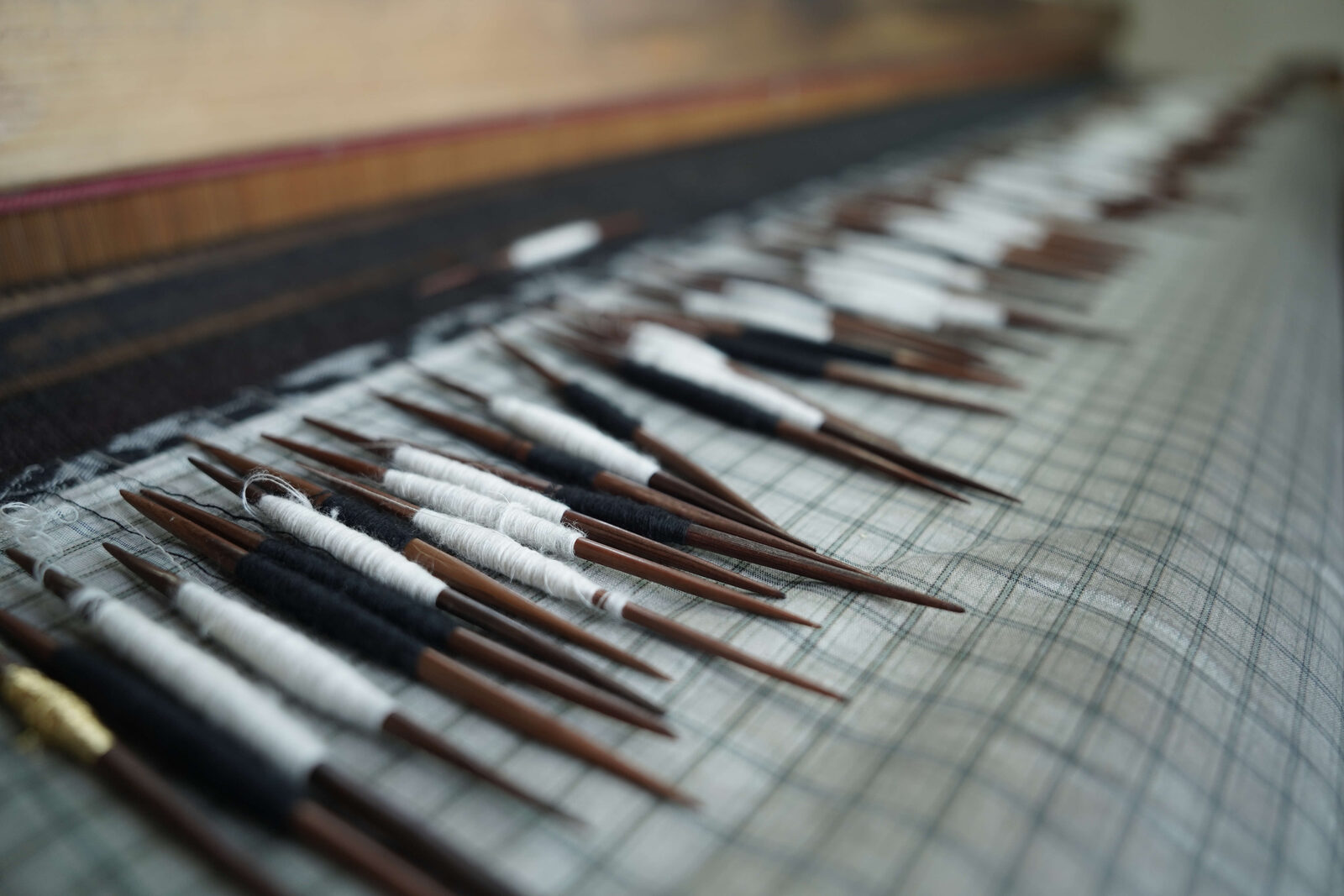
Wooden tojis wound with coloured yarn, laid out ready for Kani weaving.
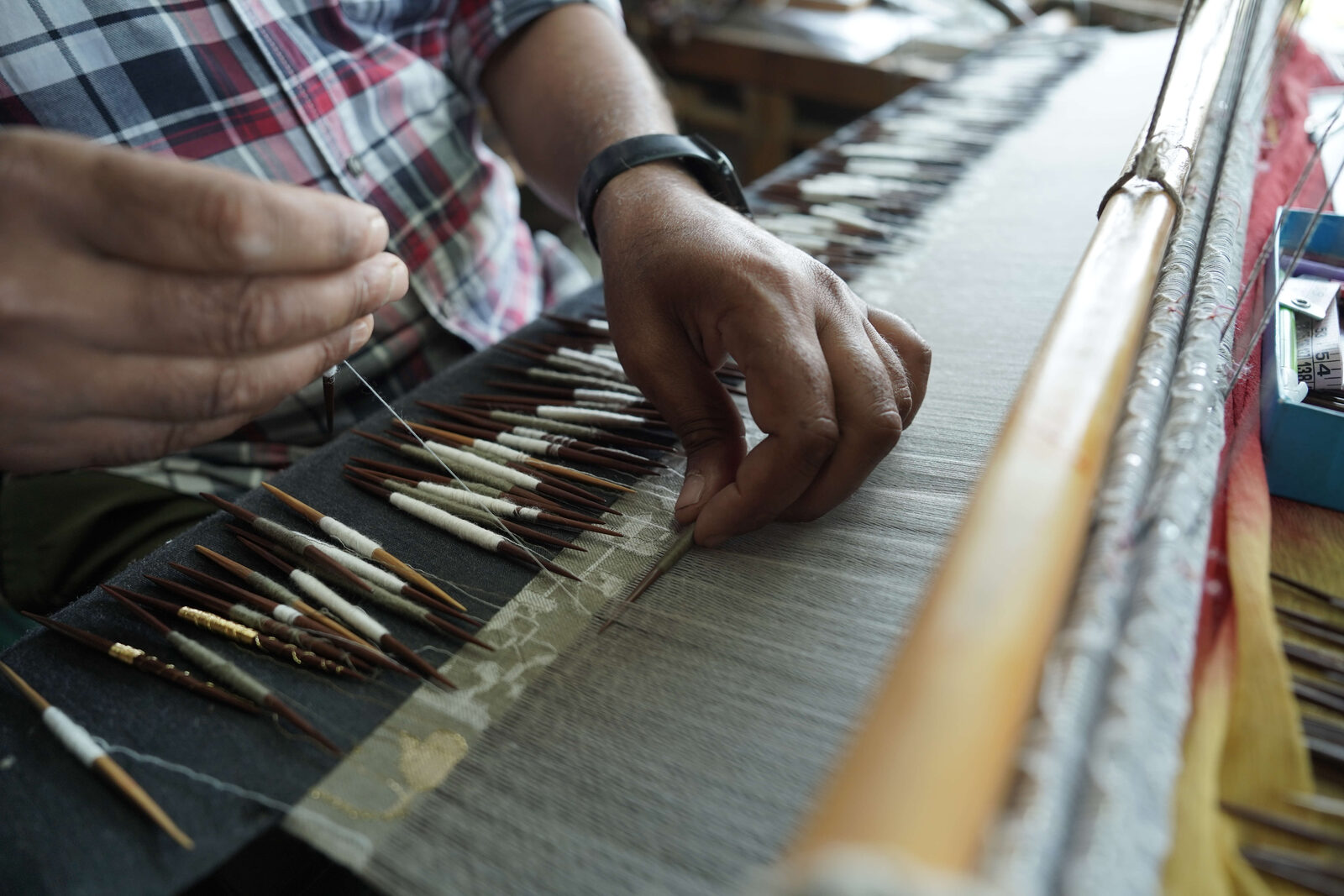
A Kani weaver picking up tojis one at a time to build the pattern on the loom.
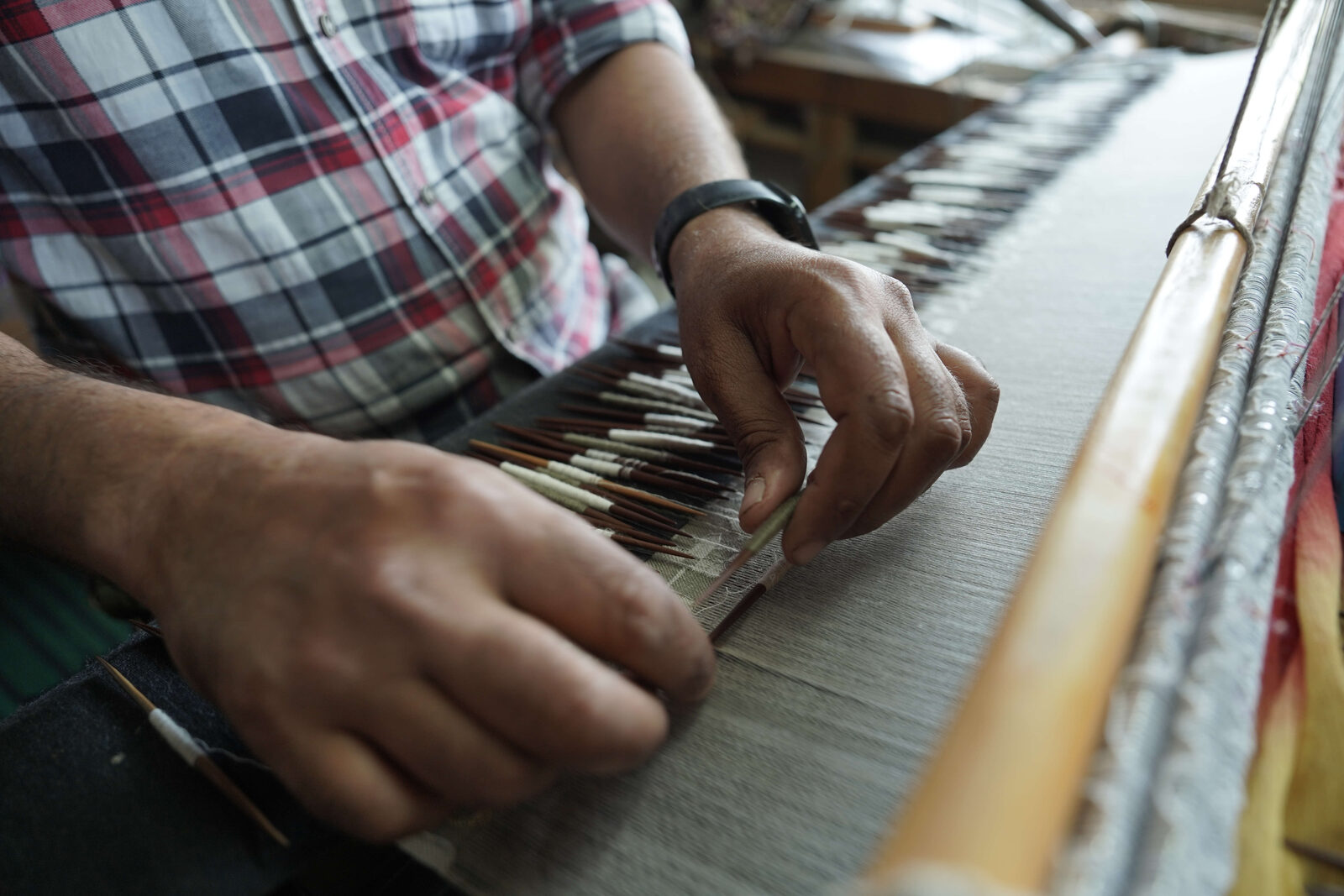
Both hands at work, threading and packing colour into the weave.
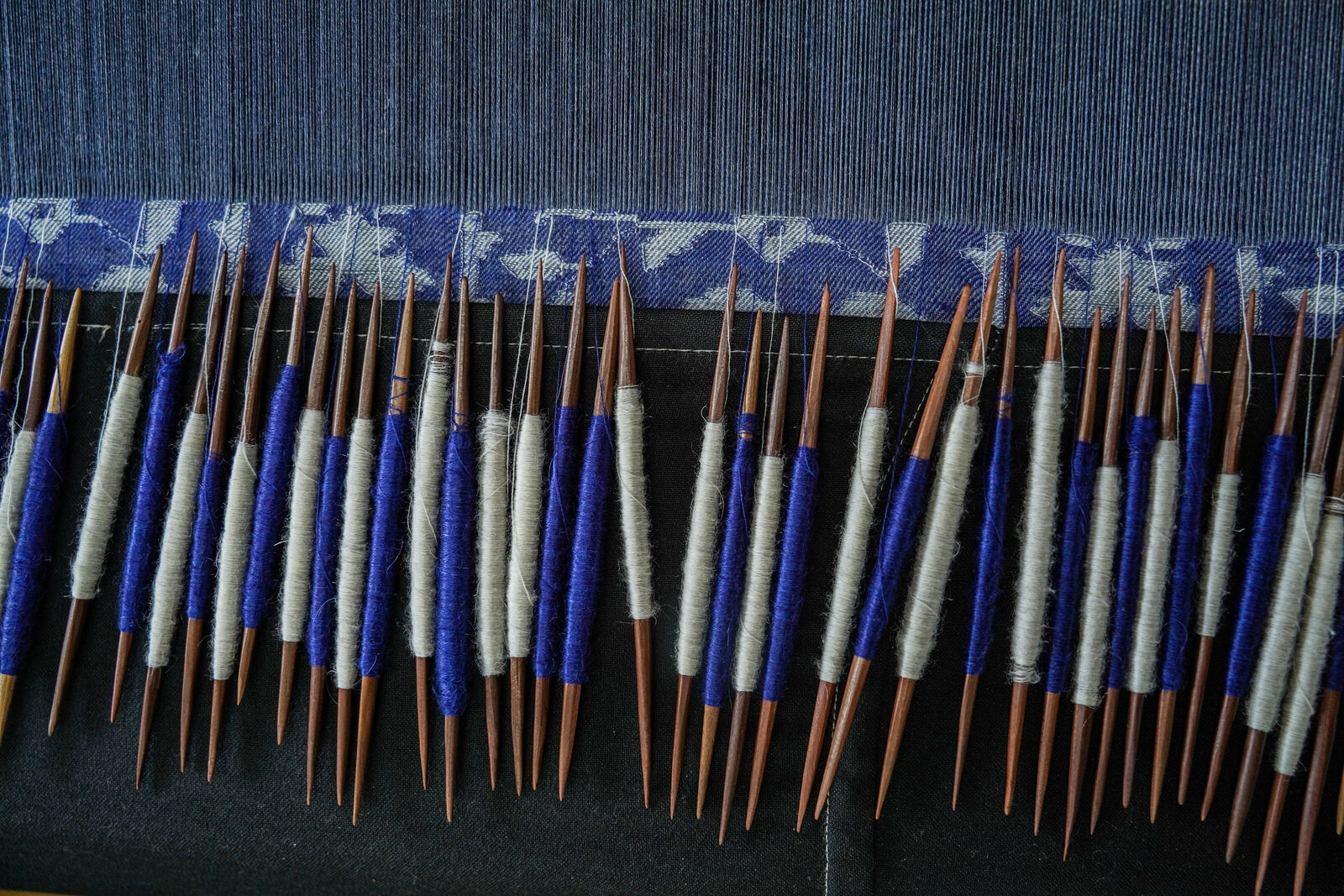
Blue and cream tojis showing a geometric pattern emerging on the loom.
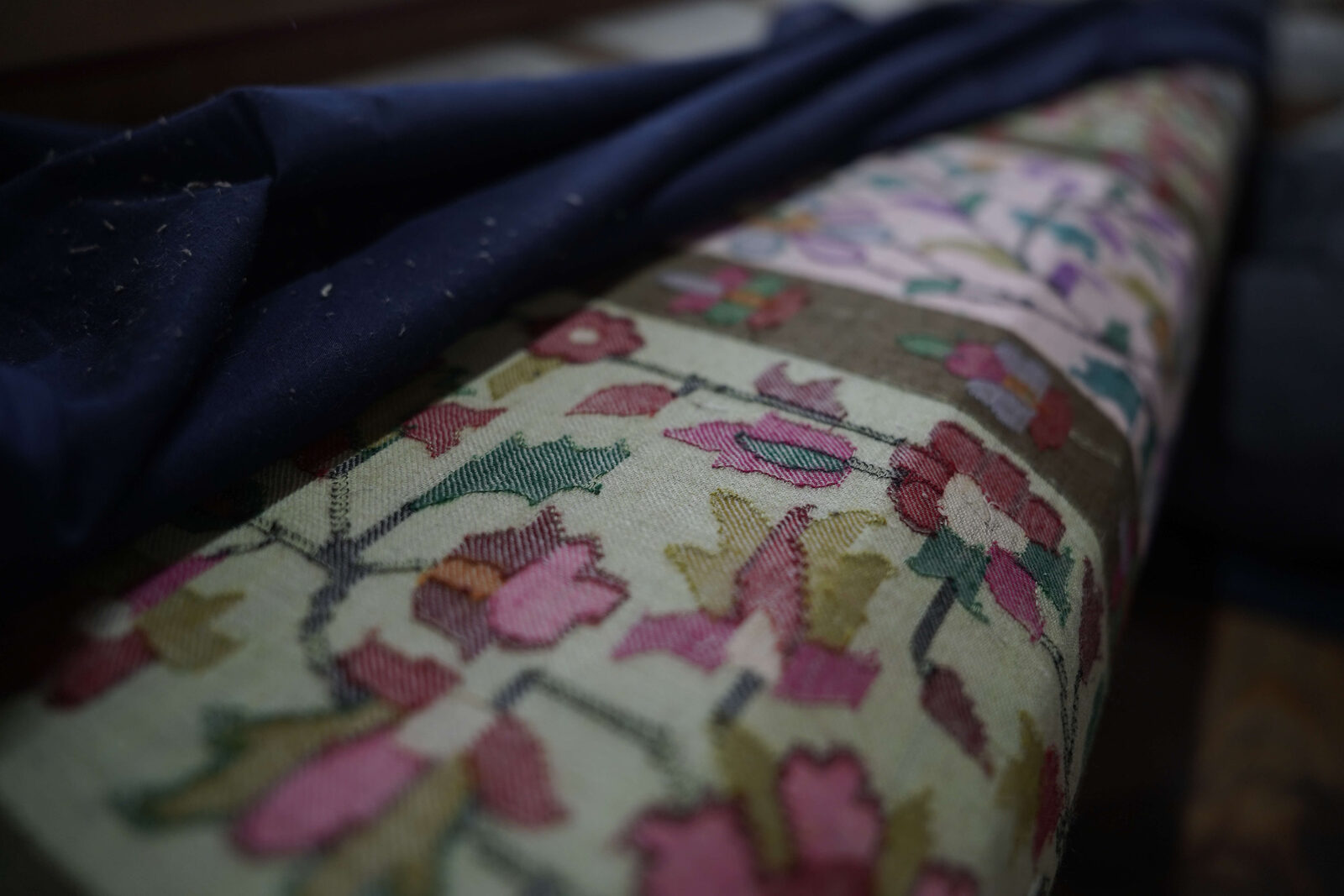
A finished bolt of Kani-woven floral shawl fabric, freshly off the loom.
Dyeing
Woven fabric is dyed in small batches rather than machine vats, giving each dyer close control over the final shade. Lengths of cloth are lowered into hot dye baths, lifted and rinsed in clean water, and checked by eye — often repeated several times — before being hung out to dry in courtyards and along the riverside.
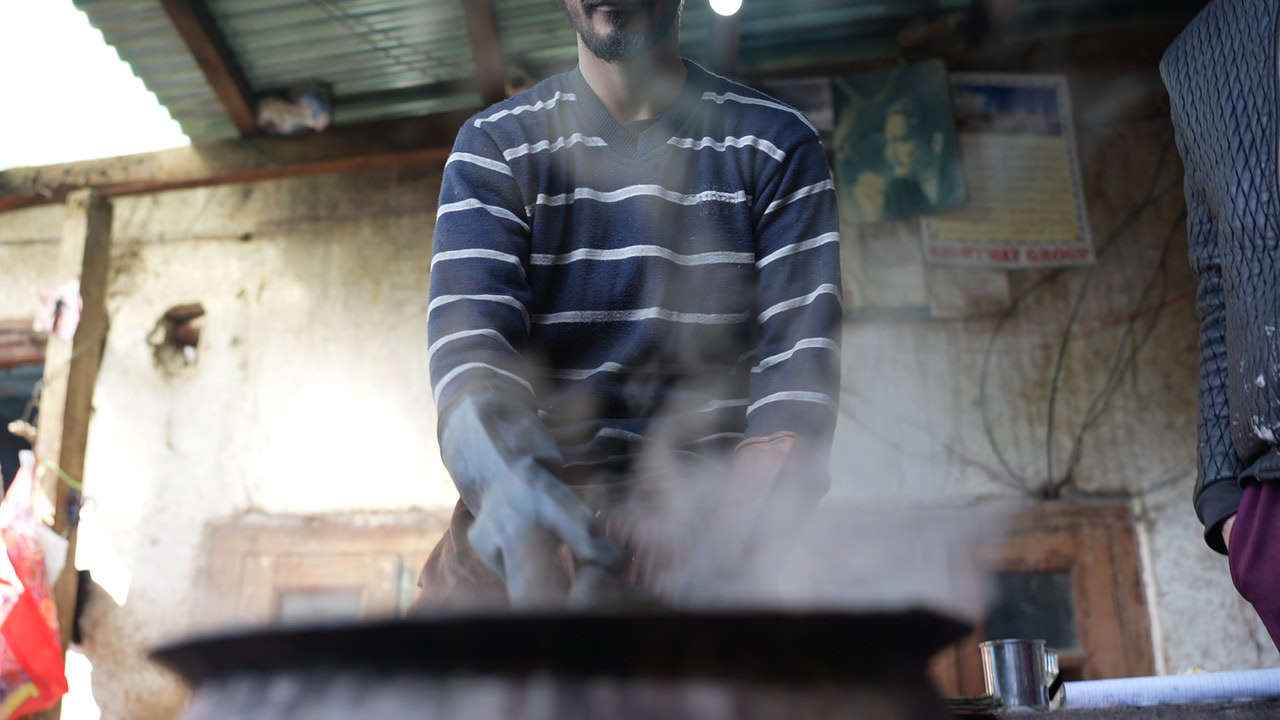
A dyer working over a steaming pot, mixing colour by hand for a small batch of fabric.
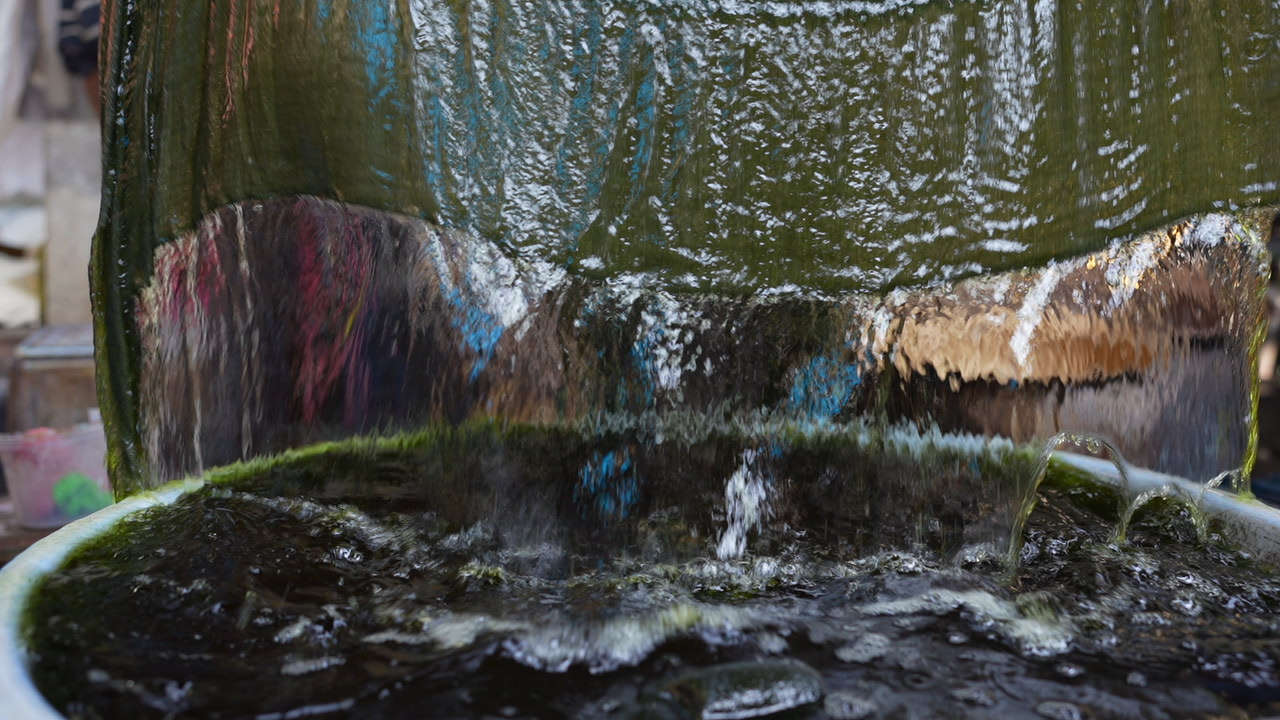
Freshly dyed fabric being rinsed in clean water until the colour runs clear.
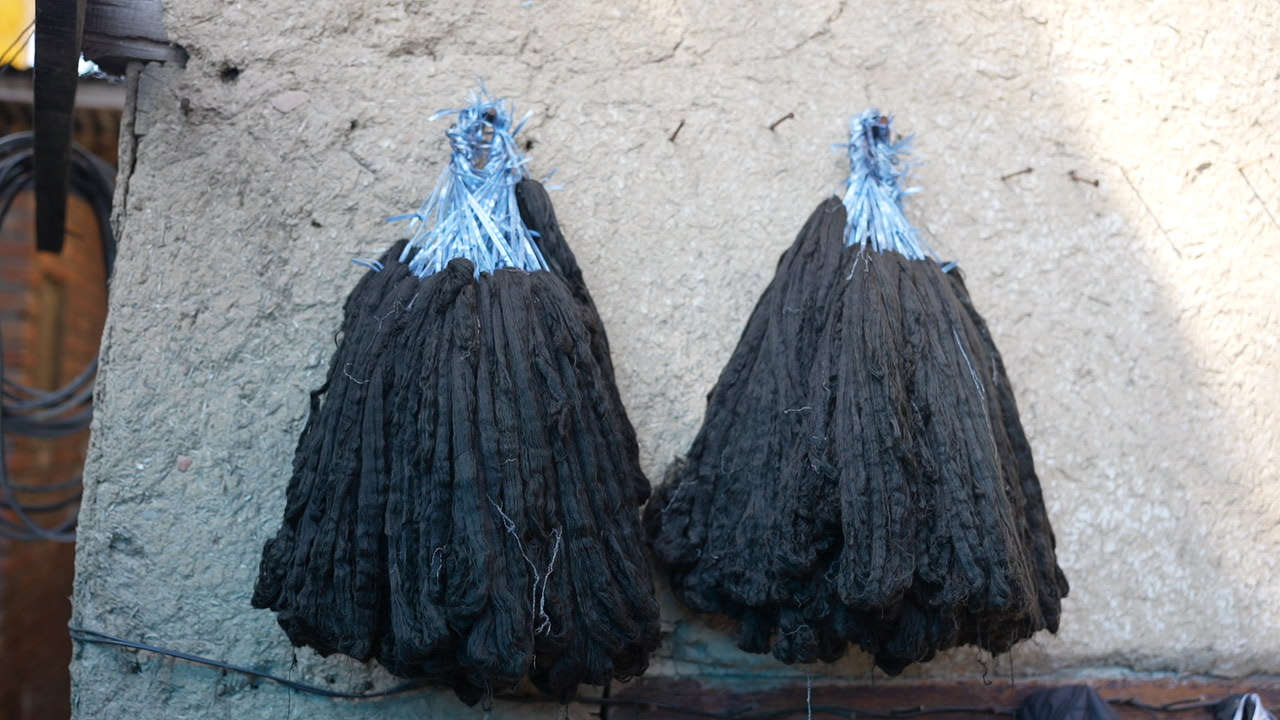
Hanks of freshly dyed yarn hung out to dry against a courtyard wall.
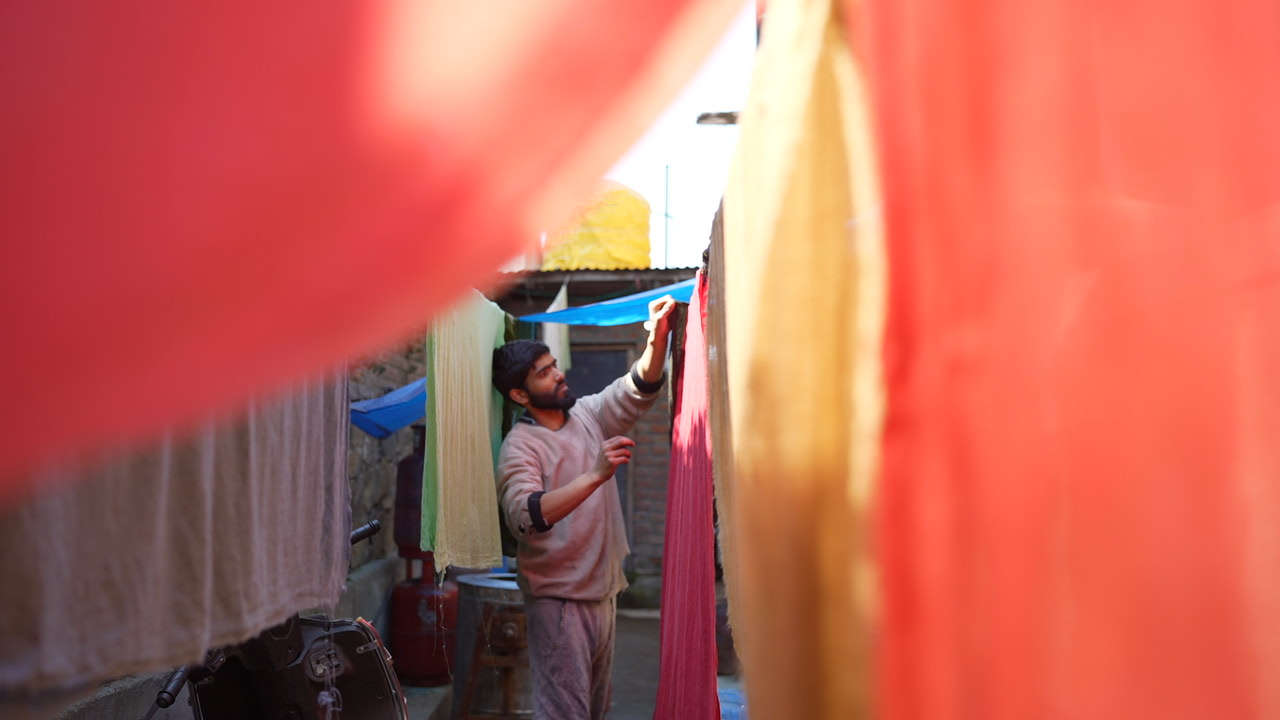
Freshly dyed lengths of fabric drying on lines in vivid colour.
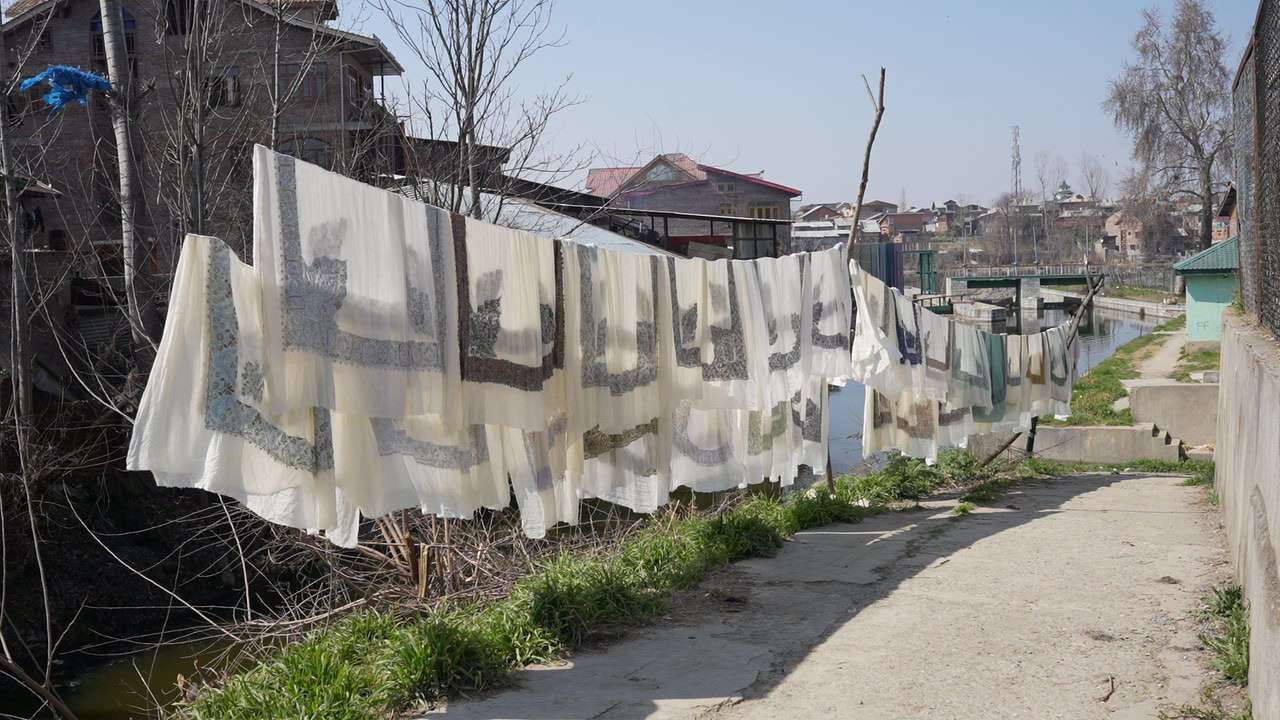
Finished embroidered shawls drying on a line beside a Srinagar waterway.
Block carving & printing
Before an embroiderer picks up a needle, many designs are first outlined onto the fabric using a hand-carved wooden block. The block itself is made in-house — a craftsman sketches the motif, then chisels it into wood by hand — before it's dipped in dye and pressed firmly onto the cloth to leave a guiding outline for the embroidery to follow.
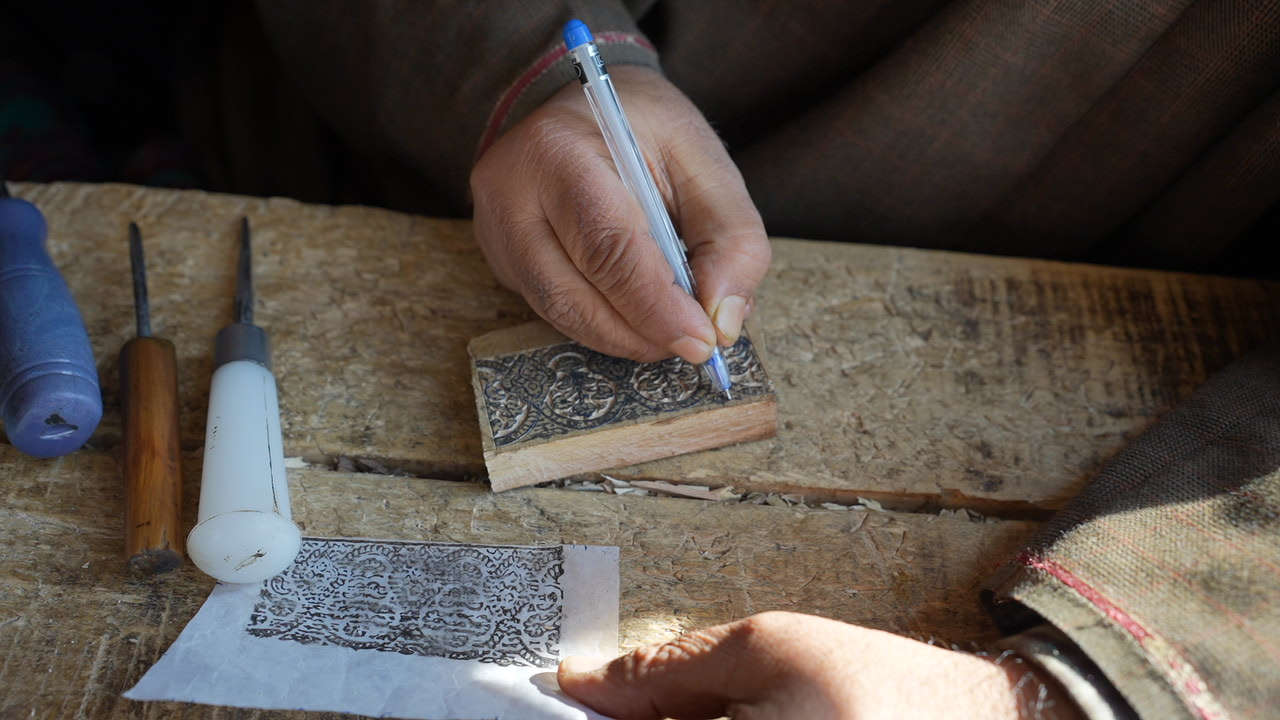
A craftsman marking out a paisley motif on a wooden printing block before carving.
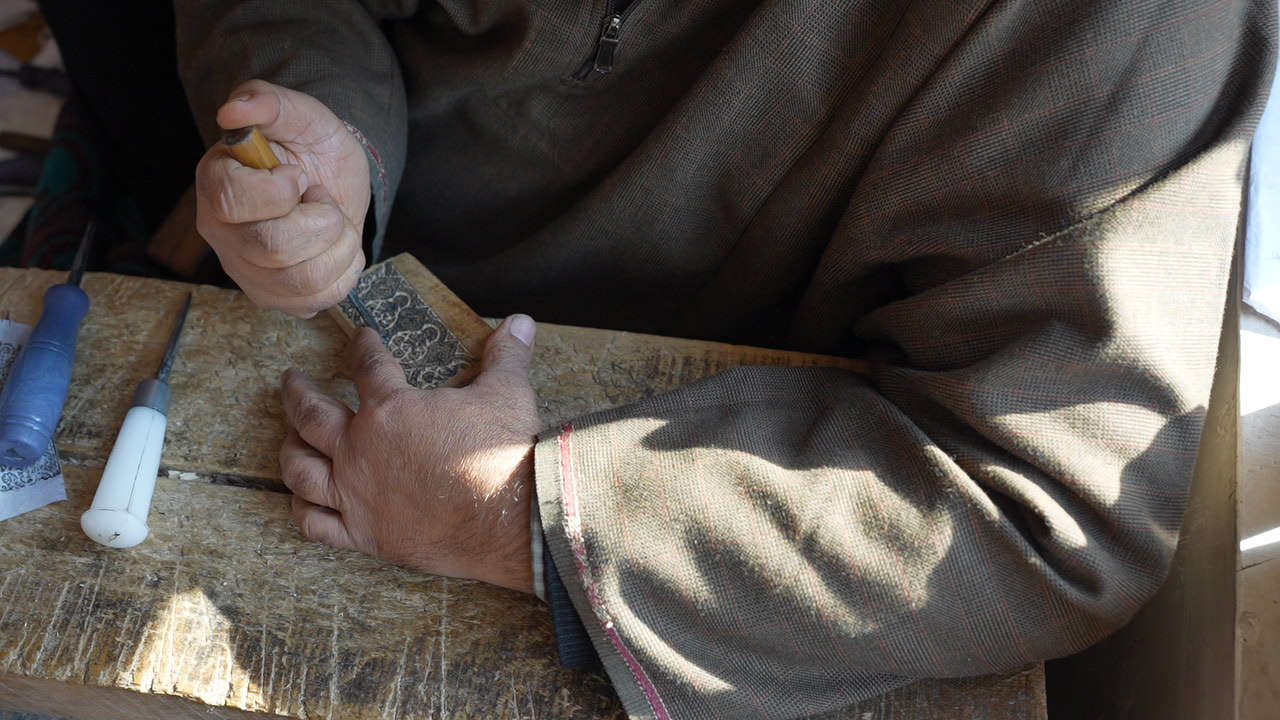
Hand chisels and carving tools used to cut the design into the block.
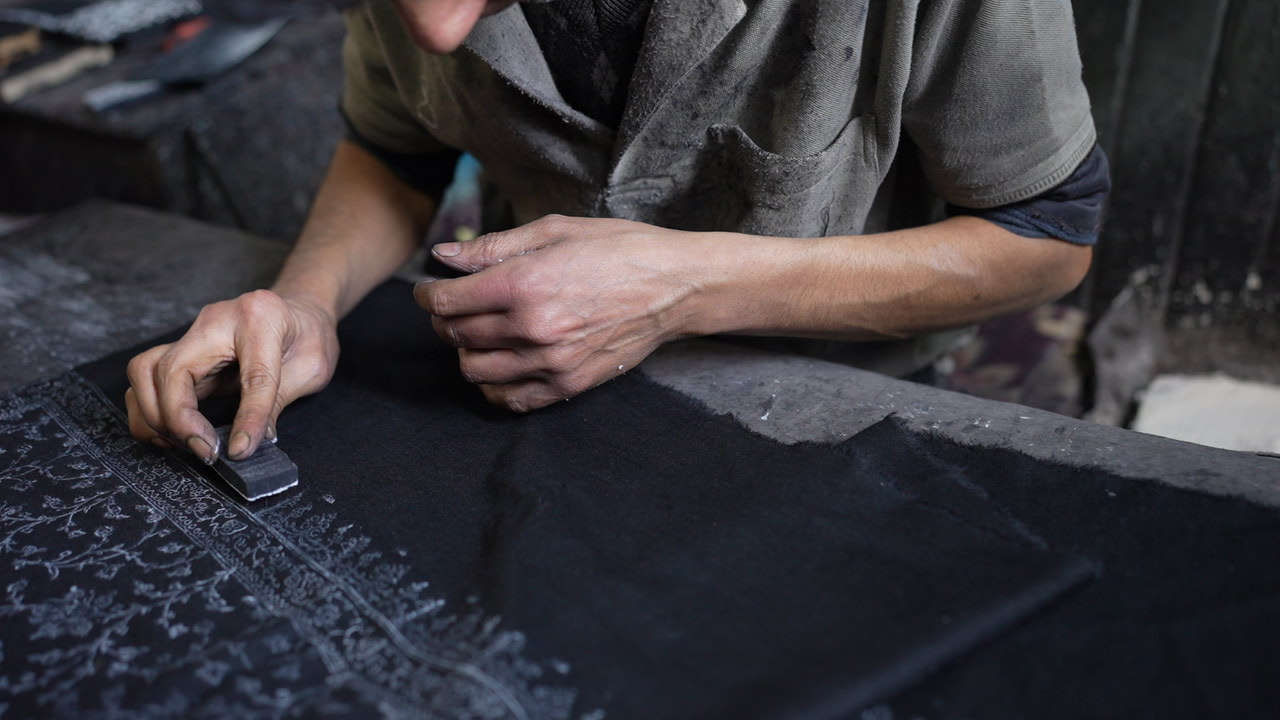
The finished block being pressed onto black fabric, stamping the outline the embroiderer will follow.
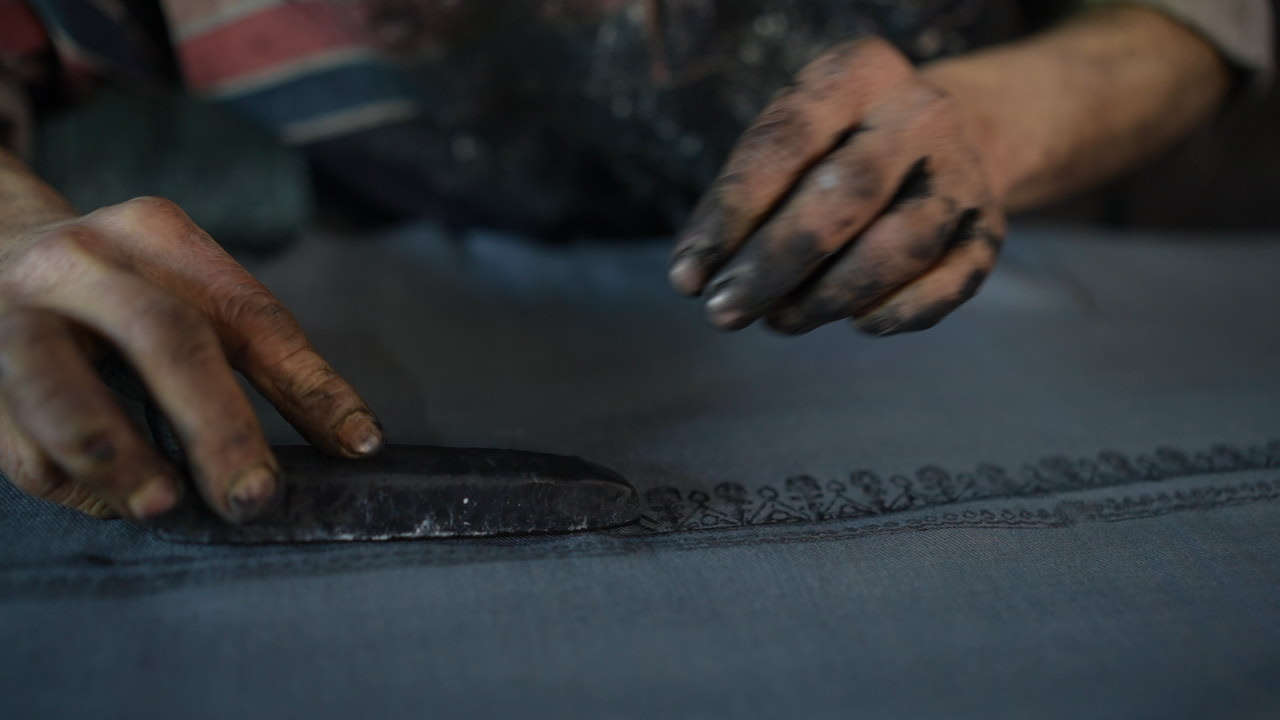
A printed border pattern in progress, stamped in charcoal along the edge of a stole.
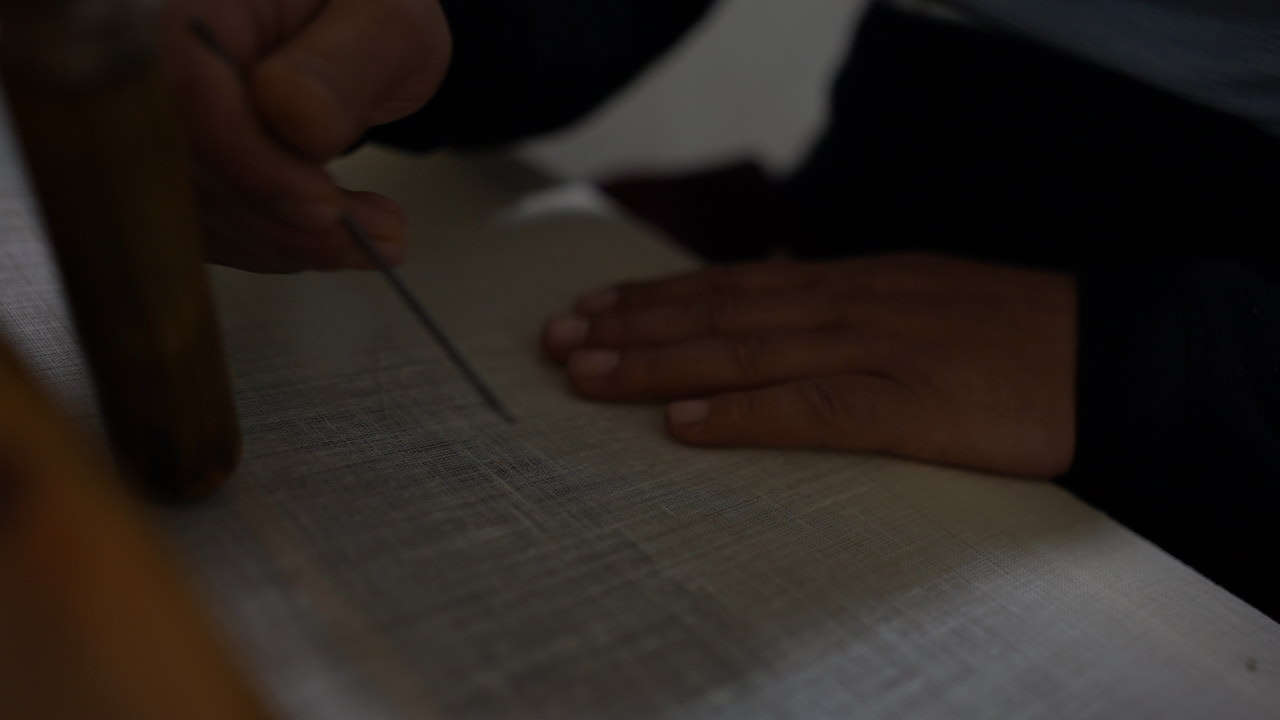
A craftsman's needle poised over plain, undyed fabric at the start of the design process.
Hand embroidery — Sozni & Aari
Once dyed and outlined, fabric moves to the embroiderers. Sozni is worked with a fine needle, stitch by stitch from the reverse side of the cloth, often taking weeks to complete a single piece. Aari work uses a small hooked needle to chain-stitch thread onto the surface, allowing bolder, faster coverage — both are done entirely by hand, guided only by the printed outline and the embroiderer's eye.
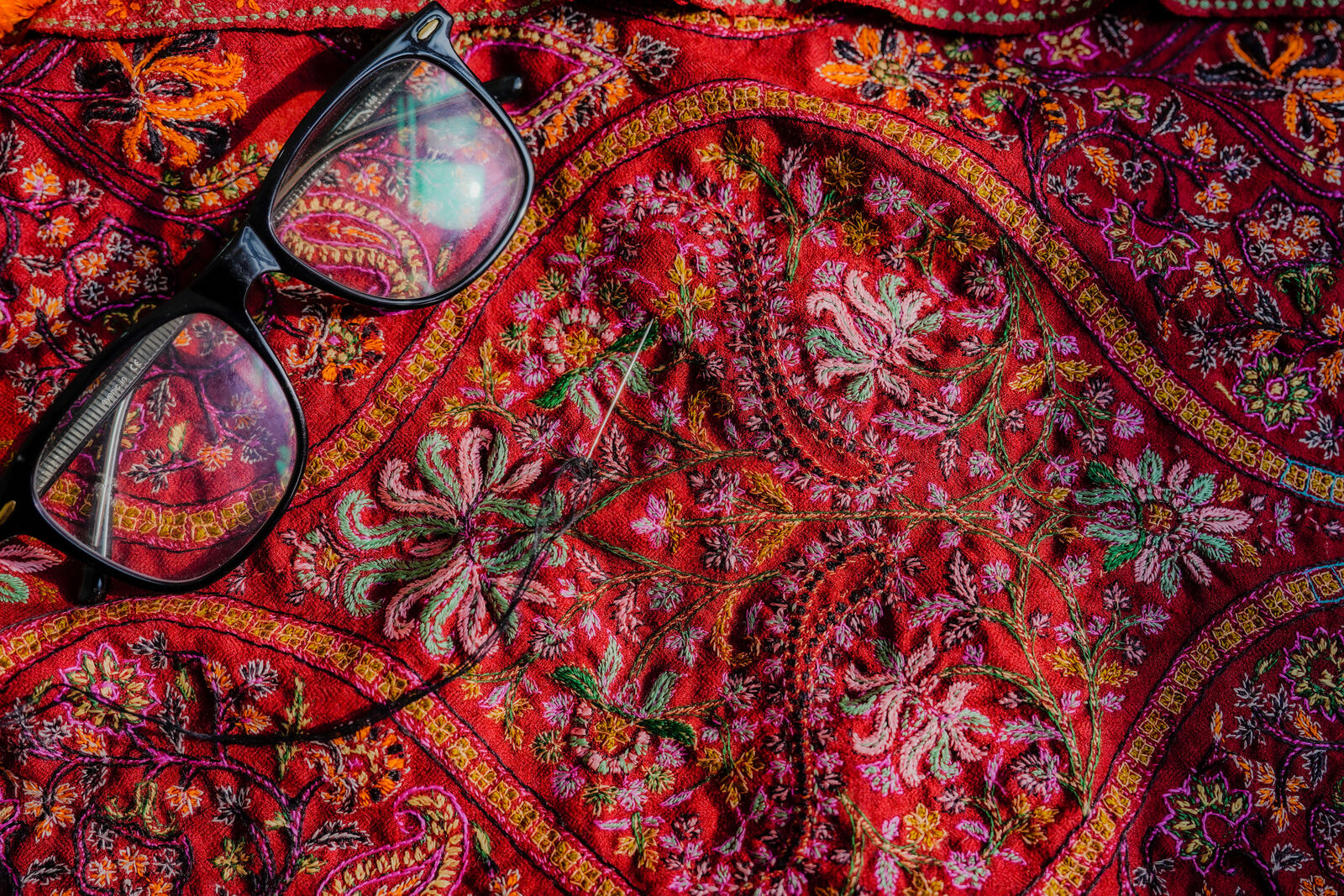
A Sozni needle mid-stitch on a densely embroidered paisley shawl.
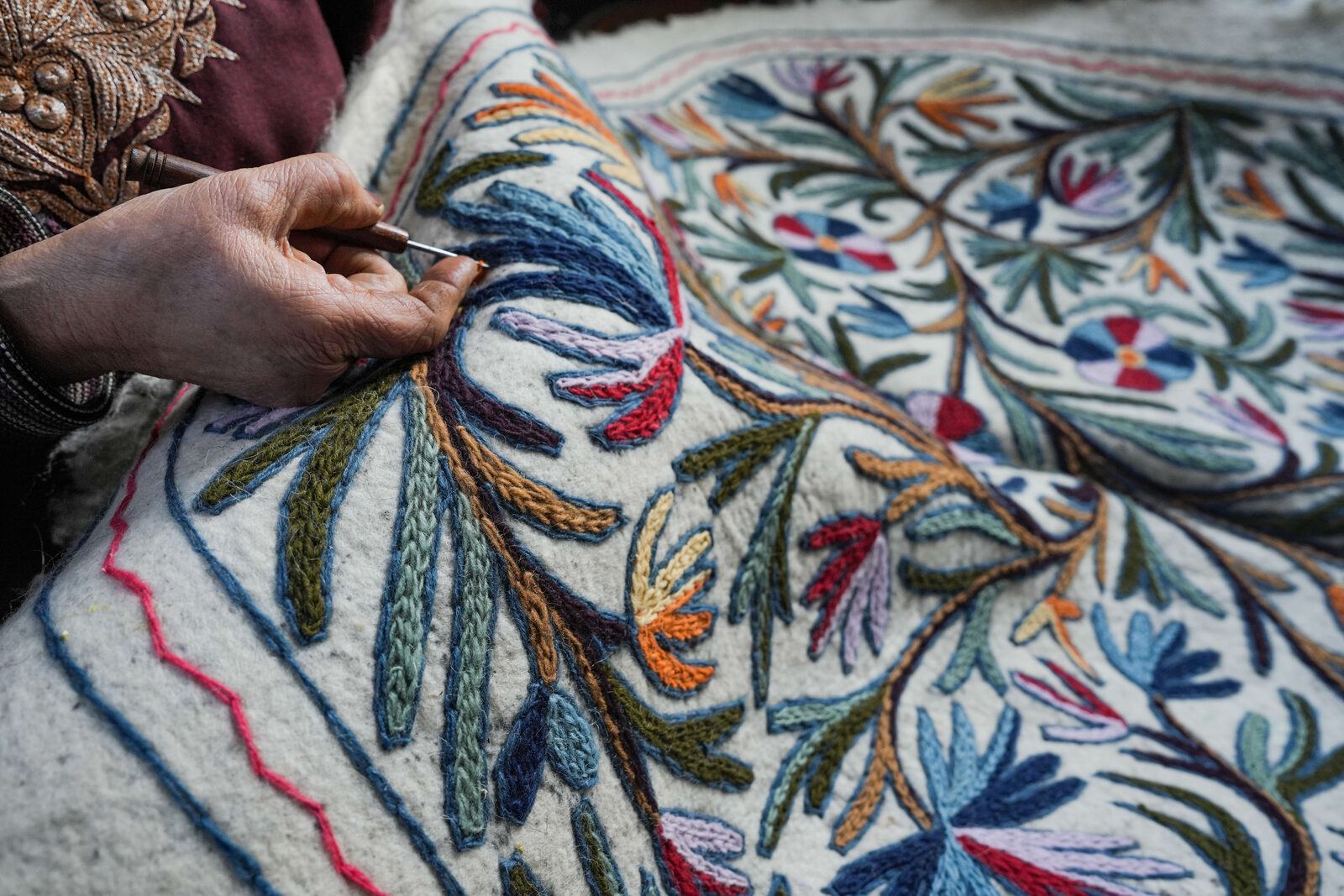
An artisan working Aari hook embroidery, building a floral design in coloured wool thread.
Fine Aari embroidery in progress, floral motifs taking shape on black wool.
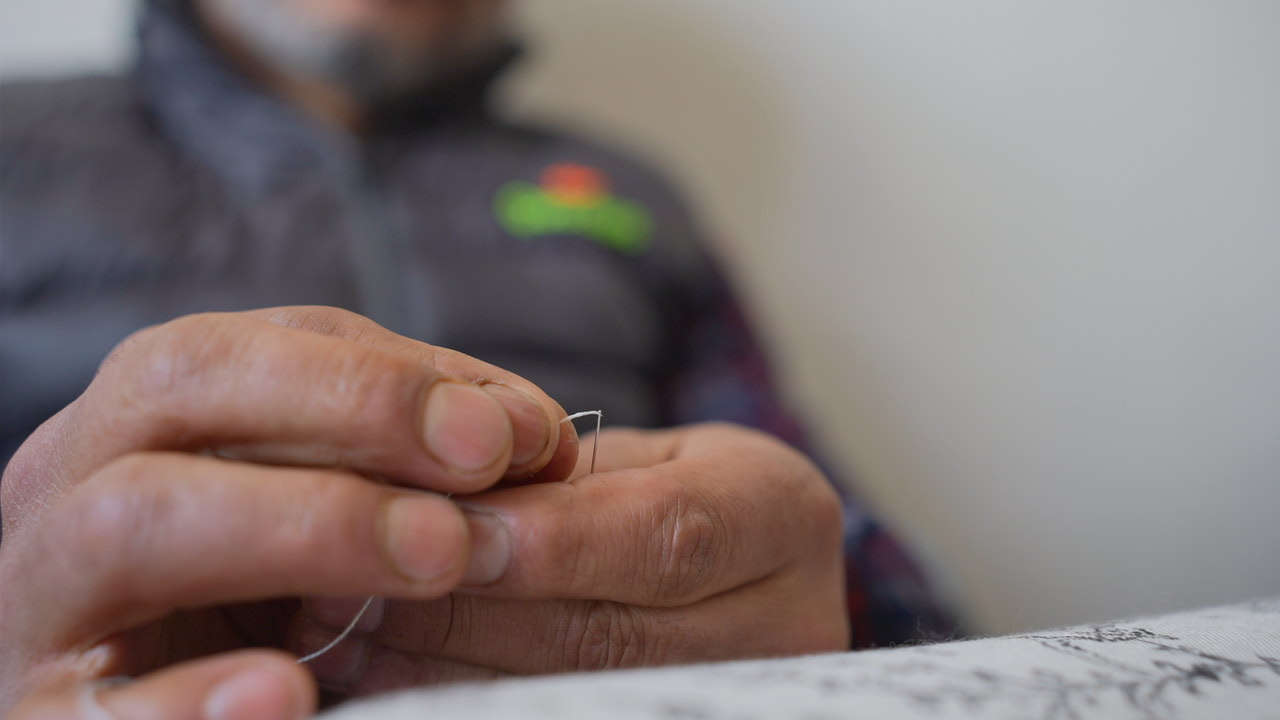
A craftsman threading a fine Sozni needle by hand before starting a new section.
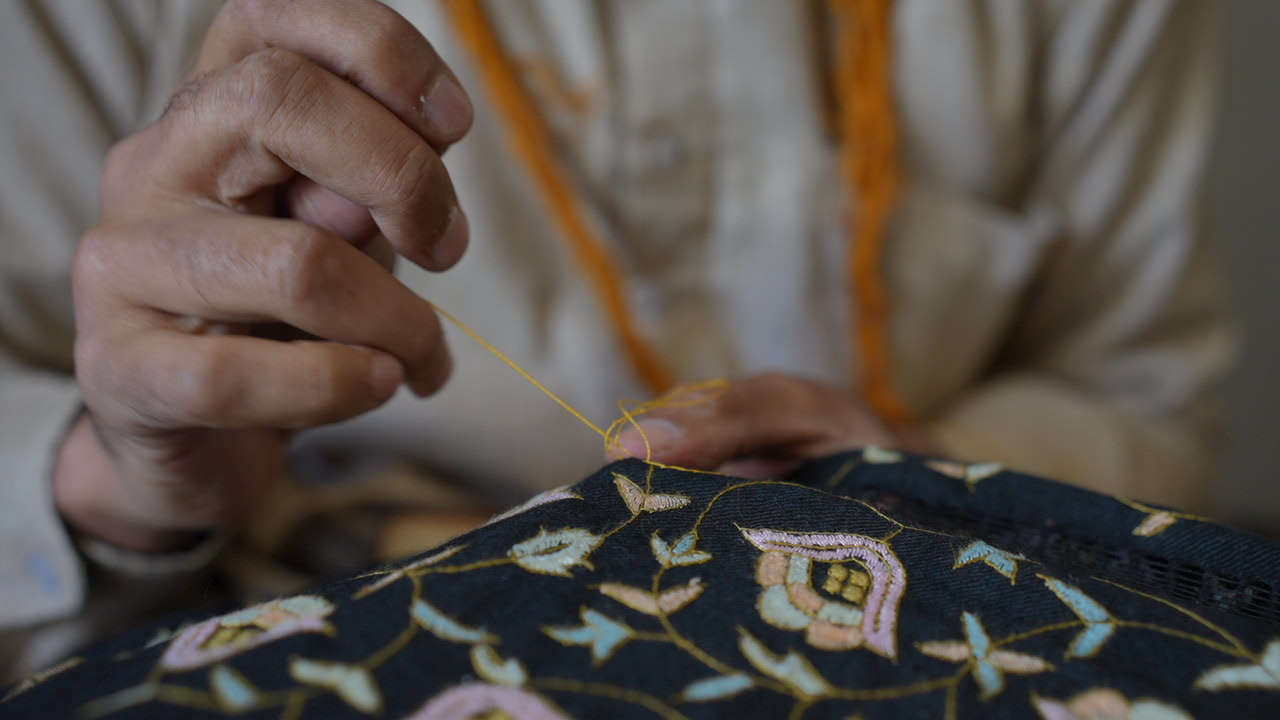
Threading a needle mid-way through a floral motif on navy wool.
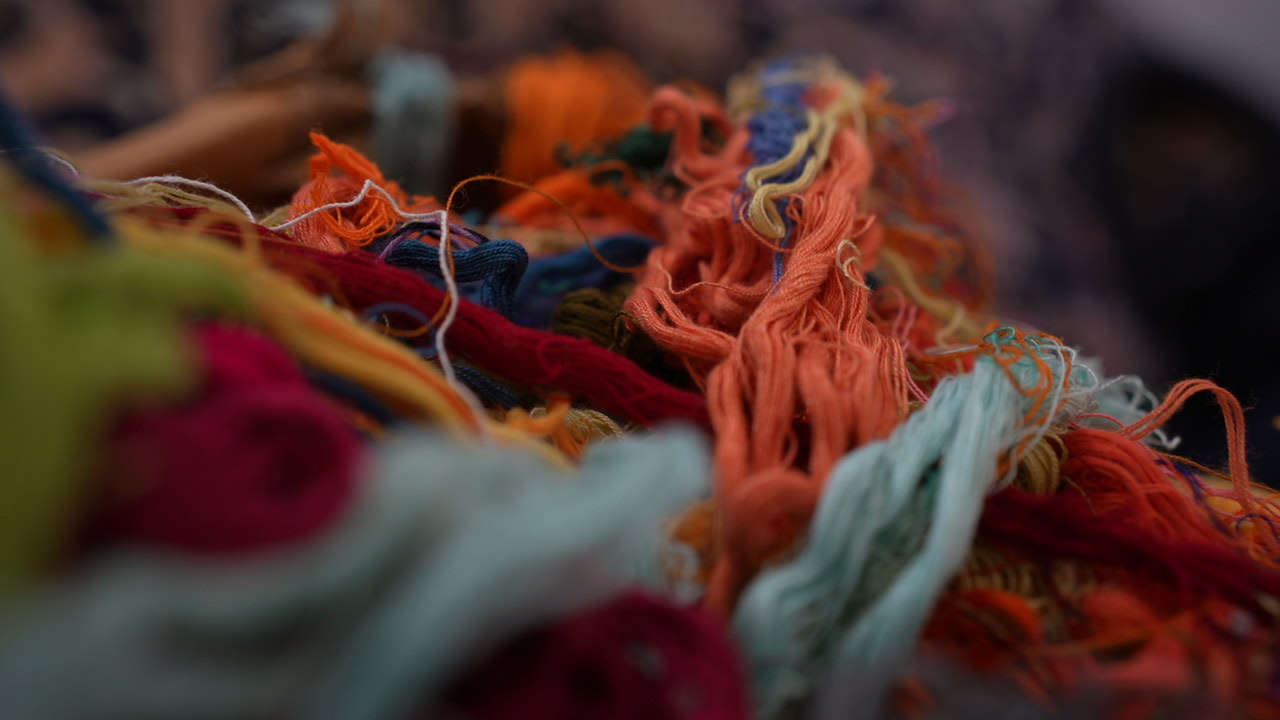
A bundle of loose embroidery threads in dozens of colours — the palette every embroiderer works from.
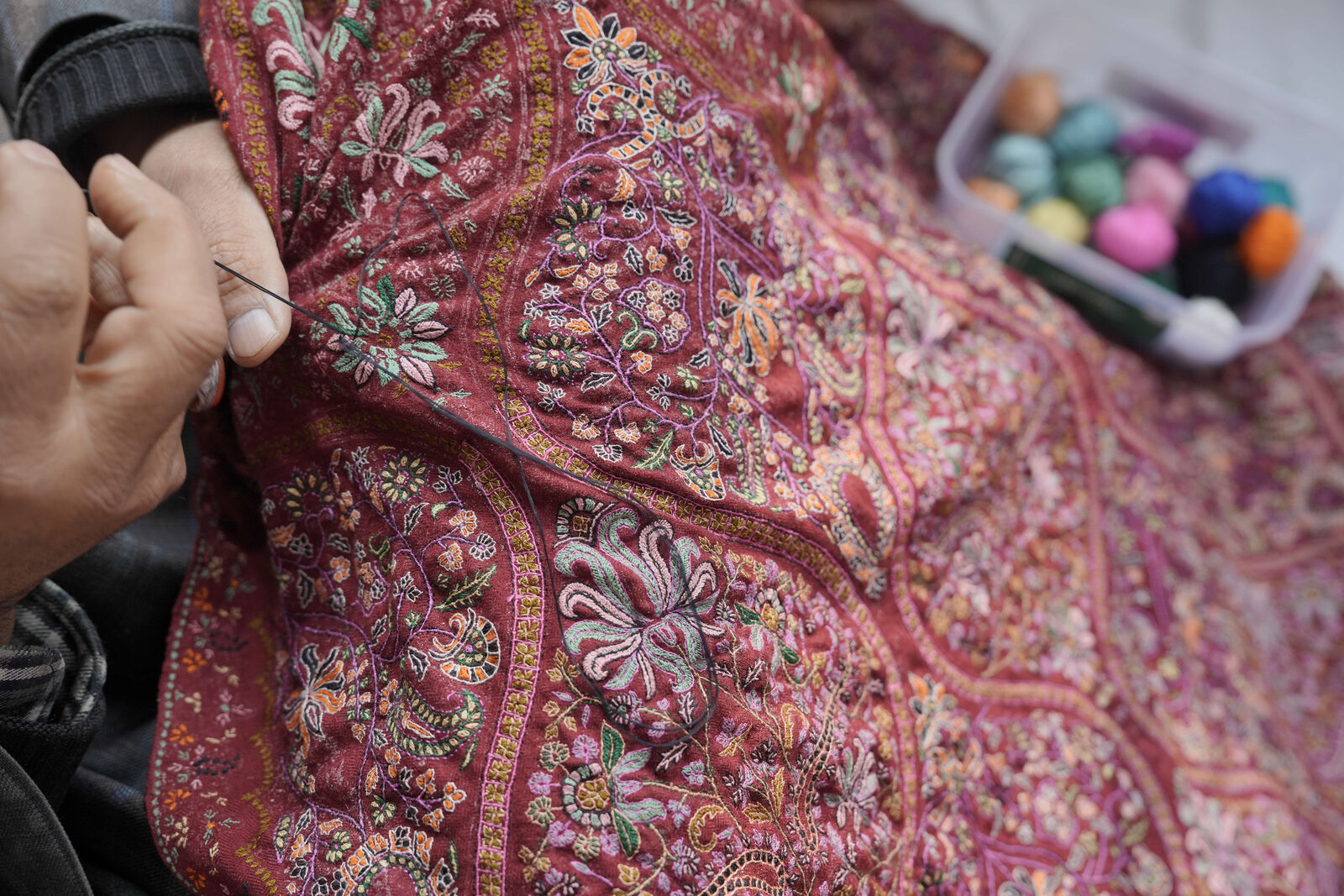
A nearly finished, densely embroidered Jamawar-style shawl, with thread bobbins waiting alongside.
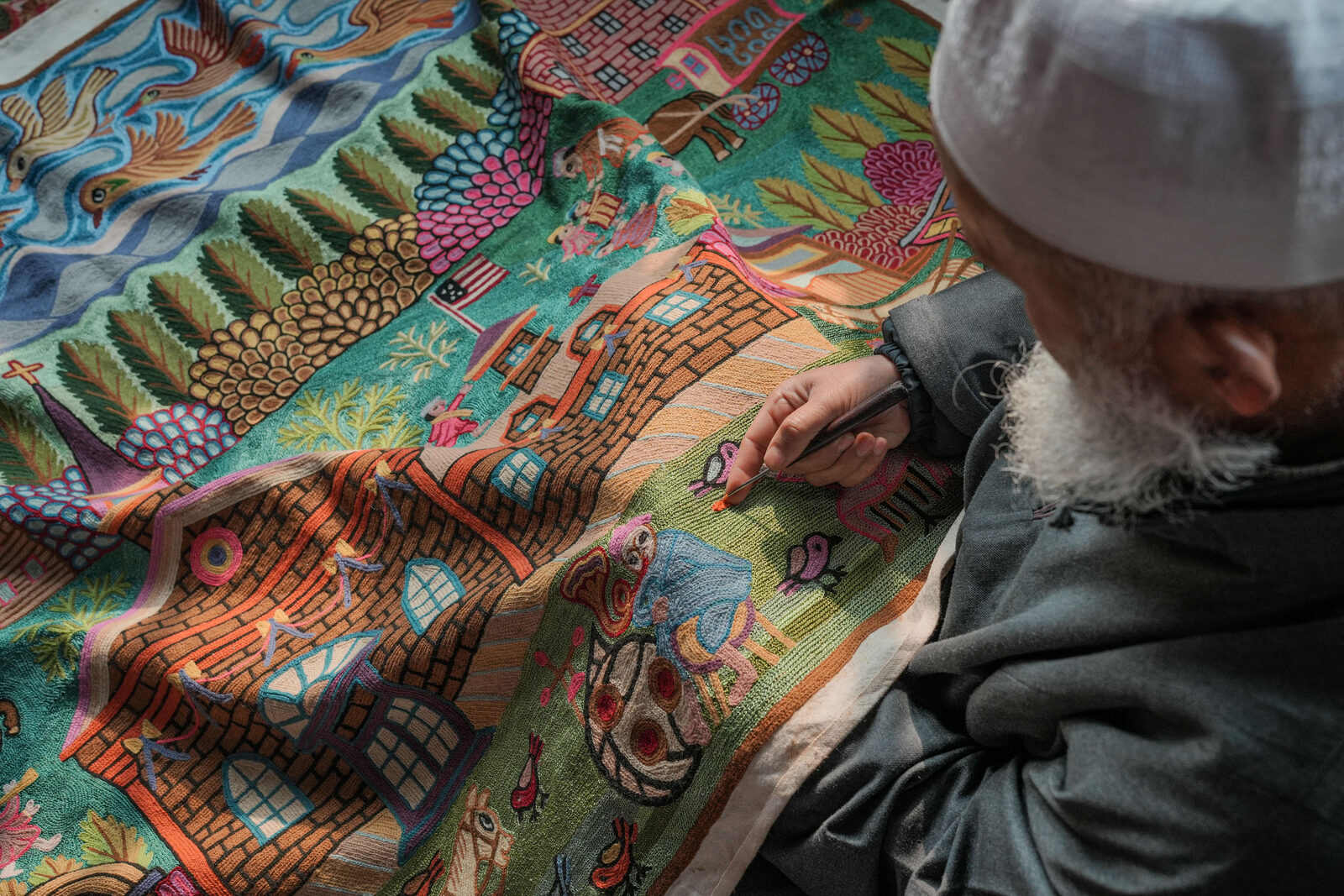
A bold, pictorial Aari tapestry taking shape, chain-stitched entirely by hand.
Finishing
The last hands-on step before a piece is ready: loose threads are trimmed, edges are cleaned up, and fabric is checked over by hand one final time.
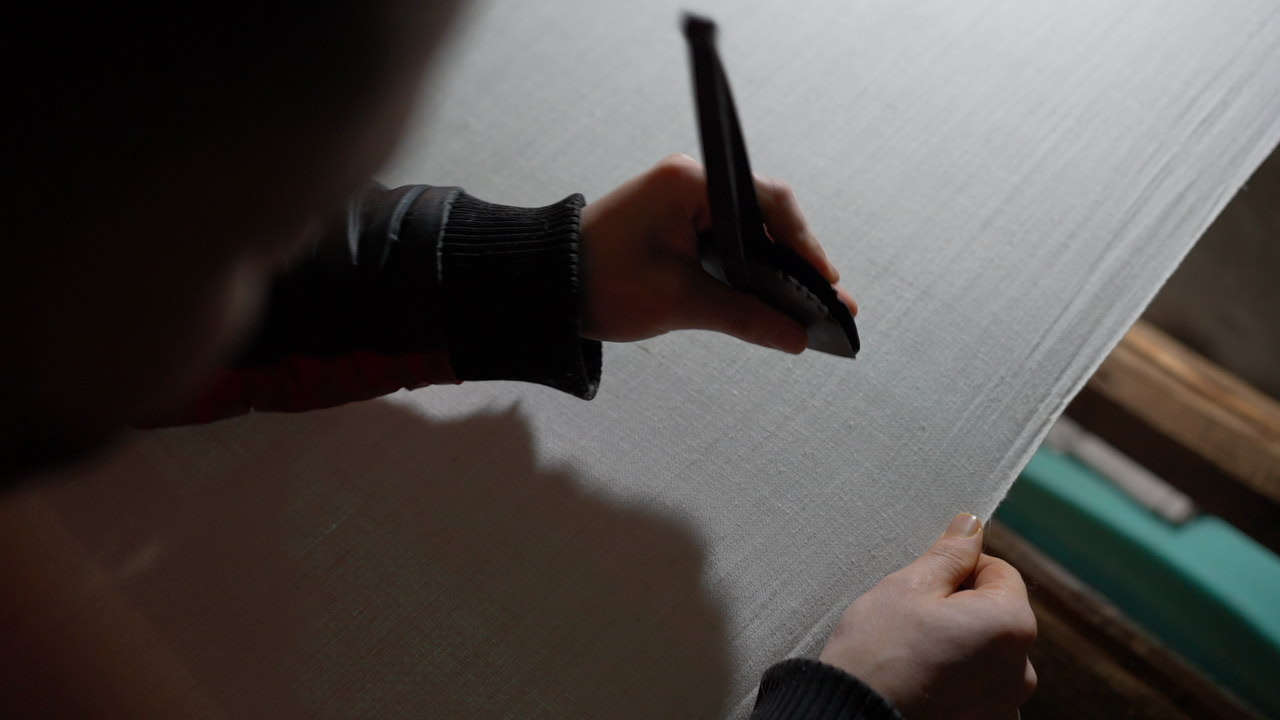
Hand-trimming the edge of woven fabric with small shears.
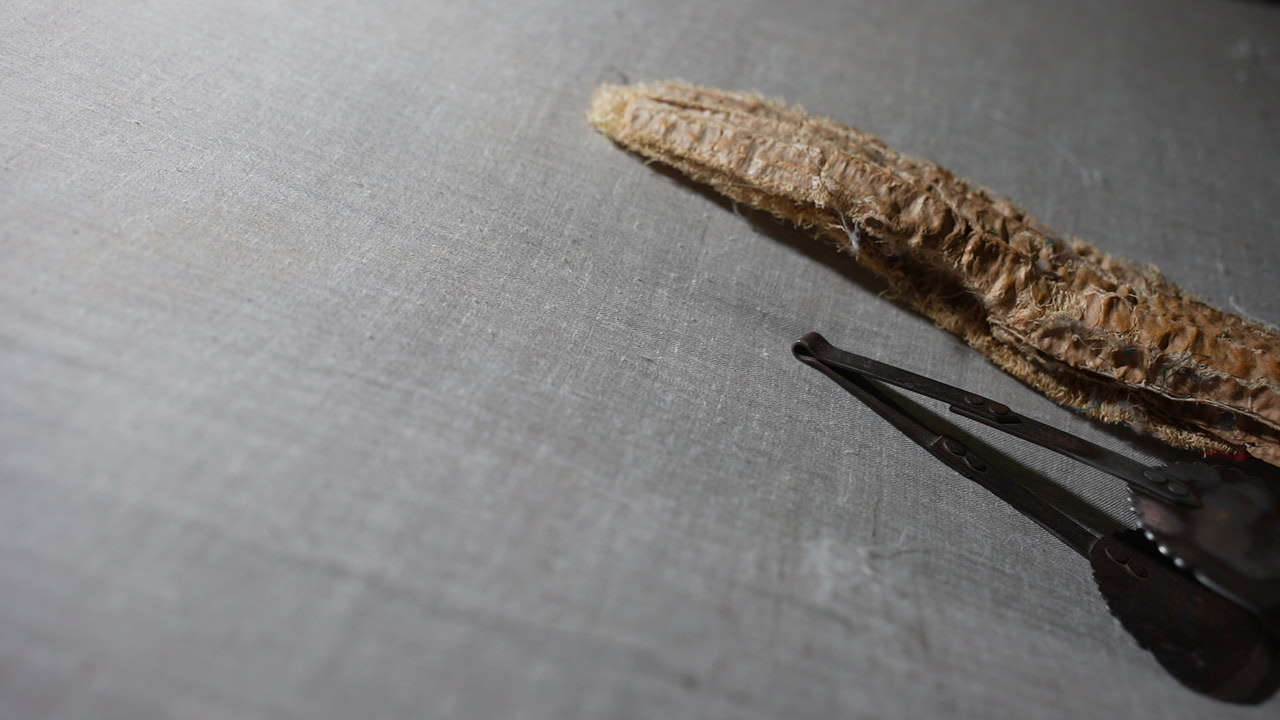
A finishing tool resting beside a raw yarn hank, ready for the last trim.
Every piece carries this craftsmanship
From spinning to the final stitch, every Art of Kash piece passes through the hands of several artisans before it reaches you. Browse our collection, or get in touch if you'd like to know more about how a particular piece was made.